

In a major technological shift, the Gujarat government will set up a Command and Control Centre (CCC) in Gandhinagar to monitor all wildlife, including lions, sloth bears, black bucks and wild asses, within the state’s protected habitats, Forest and Environment Minister Arjun Modhwadia said in an exclusive interview to The Indian Express.
The system, which is already under installation, is expected to beam live data through various feeds to help the department address emergency situations in real time.
Modhwadia also revealed how the state has secured a 100-hectare area for the second Great Indian Bustard (GIB) chick, a critically endangered bird, in the border district of Kutch, after the first one was suspected to have been killed nearly a month after it was born. The chick was born using the jump-start method, using a fertilised egg from Rajasthan to be incubated by a female bustard in Naliya, Kutch. Gujarat has just three female birds left.
The minister said the Rs 150-crore CCC project that will modernise the surveillance network follows the frequent ‘man-animal’ conflicts reported, especially in the lion landscape. Recently, there have been several incidents of lion and sloth bear attacks, some being fatal.
Gujarat is the only abode of the Asiatic lion in the world, whose population has been constantly rising for the past two decades; the last census showed 891 lions across 11 districts.
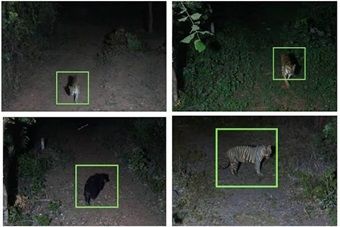
“The Command and Control Centre (CCC) will be in Gandhinagar, but surveillance will be done of the wildlife areas and our (forest) activities. (These areas) will be connected (with CCC) through CCTV networks. At the same time, we will also use drones and AI (artificial intelligence- based camera network), so that we can alert the people in the vicinity if there is any accident or movement. We will erect a network of CCTV in the Greater Gir”, said the minister. Greater Gir is the area outside the national park and core protected forest areas of the Asiatic lion.
“The focus is more on lions, but it will cover areas of wild ass (in Little Rann of Kutch), the Velavadar (blackbuck)sanctuary, sloth bear (in Banaskantha) corridor, etc,” he added.
Traditional wildlife surveillance has relied on watchtowers, beat guards and trackers who cover vast stretches of forest, monitoring wildlife movements on foot or in vehicles. They report any unusual activity or incidents to their teams through radio sets.
The CCC will speed up the relaying of information and action. The cameras will be placed not only in conflict areas but in all forest areas, wherever the need is felt, said the minister.
“The network will reduce road accidents and conflicts. We will be able to get an idea for planning. For example, if a wildlife’s prey base has decreased, we will know. For forest management, if there is overgrowth of a species of trees, the forest department will get an idea for trimming it. The forest department’s activities can be monitored,” Modhwadia said.
The CCC will also receive feeds from other surveillance networks like the Western Railway, which has installed high-tech systems to prevent lions from being killed by train hits, and the Sheth Anandji Kalyanji trust, custodian of the Palitana Jain pilgrimage. In July, the trust issued an advisory to visitors to “travel in groups” following frequent sightings of lions in the Shetrunjay hills.