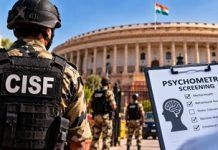


The Delhi Police has defended its deployment of Facial Recognition System (FRS) technology during recent student demonstrations over examination paper leaks, telling the Supreme Court that the software only captured images of individuals with existing criminal records or history-sheeters.
In a sworn affidavit presented before a Supreme Court bench comprising Chief Justice Surya Kant, Justice Joymalya Bagchi, and Justice V Mohana, law enforcement officials countered claims of mass surveillance, describing the measure as a “proportionate, bona fide, and legitimate State interest”.
Addressing privacy concerns raised by petitioners, the police clarified that the FRS does not automatically profile every individual present at a demonstration. Instead, the system matches footage against an existing database of serious criminal offenders, completely bypassing petty traffic offenders or peaceful members of the public.
● Key Database Findings: FRS matched 2,873 individuals present at the protest site with existing serious crime records.
● Repeat Offenders: Among those matched, 92 individuals were involved in more than 10 criminal cases, including 47 registered history-sheeters.
● Verification Protocols: Police maintained that no legal or punitive action is taken strictly on facial recognition matches alone without mandatory secondary field verification.
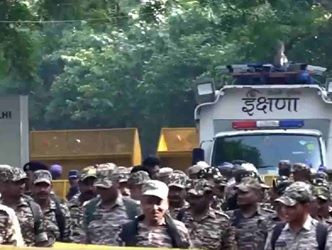
The affidavit detailed the scale of the agitation at Jantar Mantar, where a crowd estimated at over 30,000 protesters faced around 5,000 police personnel during a march towards Parliament. Law enforcement argued that what began as a student-led agitation over examination leaks saw significant infiltration by anti-social elements.
The submission highlighted that over 240 police officers and approximately 200 protesters sustained injuries during clashes after barricades were breached. Plainclothes “spotters” and real-time surveillance tools were utilised specifically to identify individuals posing threats within the crowded venue.
Senior advocates representing the petitioners strongly contested the submission, raising doubts about the operational mechanisms of automated facial recognition. Counsel argued that the software inherently processes video feeds of entire crowds before identifying potential matches, alleging that third-party entities were involved in handling biometric data.
The Delhi Police rejected allegations of selling personal biometrics or conducting indiscriminate profiling, labelling such claims as false narratives intended to mislead the public. The apex court continues to hear arguments regarding the constitutional safeguards required when deploying biometric surveillance tools during public assemblies.