



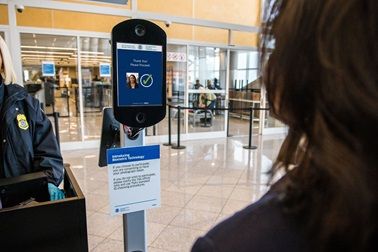
A group of Democratic lawmakers has revived legislation that would sharply restrict federal use of facial recognition and other biometric technologies, with new language that broadens parts of the moratorium proposed in earlier versions of the bill. Led by Sen. Edward Markey, the lawmakers including Sen. Jeff Merkley and Reps. Pramila Jayapal, Rashida Tlaib and Ayanna Pressley, announced the reintroduction of the Facial Recognition and Biometric Technology Moratorium Act. The bill has been referred to the Senate Judiciary Committee and has not advanced beyond introduction.
“Facial recognition and other biometric technologies in the hands of government agencies have become tools of authoritarianism,” Markey said. “Agencies such as Immigration and Customs Enforcement (ICE) and Customs and Border Protection (CBP) are using these technologies to track, target, intimidate, and surveil communities across the country.”
The legislation would make it unlawful for a federal agency or federal official acting in an official capacity to “acquire, possess, access, or use” a biometric surveillance system in the U.S.
The bill would also prohibit the government from accessing or using information derived from a biometric surveillance system operated by someone else. That provision would potentially reach federal use of state, local and privately operated biometric systems, not just systems owned by federal agencies.
“Federal official” is defined broadly to include officers, employees, agents, contractors and subcontractors of the U.S. government. The geographic definition expressly includes airports, ports of entry and border zones.
The moratorium could be lifted only through another act of Congress that specifically identifies who can use the technology, the permitted biometric modality and the purposes for which it can be used.
The legislation would also have to prescribe rules governing retention, sharing, and access to biometric data and audit trails; establish accuracy auditing and minimum performance requirements, including measurement by gender, skin color, and age; provide protections for due process, privacy, speech, and association; and establish mechanisms for enforcing the requirements.
That structure differs from a regulatory framework in which individual agencies determine when and how to deploy biometric systems. Under the proposed bill, Congress itself would have to affirmatively authorize covered uses before an agency could proceed. The bill defines a “biometric surveillance system” as software that performs facial recognition or other biometric recognition either in real time or against recordings or photographs.
Facial recognition would encompass more than simply matching two photographs.
The definition covers automated or semi-automated systems that identify someone, capture information about them, match an individual to a list or otherwise generate surveillance or identification information based on facial characteristics. It also includes systems that log characteristics of a person’s face, head, or body to infer emotion, associations, activities, or location.
“Other biometric recognition” includes gait and other immutable characteristics ascertained at a distance, as well as voice recognition. The bill excludes identification using fingerprints or palm prints not obtained at a distance.
That wording represents a notable change from the 2023 Senate version of the legislation, S. 681. Earlier language referred to “other remote biometric recognition,” while the new bill uses “other biometric recognition” and excludes fingerprints or palm prints only when they are not obtained at a distance. The facial recognition definition also now expressly includes matching someone to a list and generating identification information.
The changes make the 2026 language potentially significant for emerging biometric systems that do not fit neatly into conventional facial recognition, particularly technologies designed to collect identifying characteristics without physical contact.