


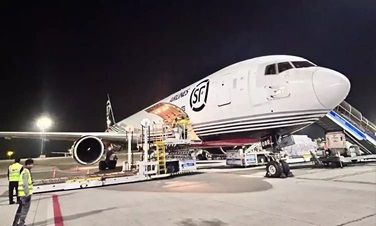
India has permitted the transfer of cargo without the need for re-screening at transfer airports. The Bureau of Civil Aviation Security (BCAS), under the Ministry of Civil Aviation, has revised its security guidelines to ease cargo movement at transfer airports.
BCAS has issued a comprehensive set of security guidelines governing the handling of transfer cargo and mail at Indian airports. Issued as Addendum–II to AVSEC Circular No. 6/2024, the directive standardises procedures for four types of transfer shipments: International to International (I–I), International to Domestic (I–D), Domestic to International (D–I), and Domestic to Domestic (D–D). The circular, released under the powers conferred by the Aircraft (Security) Rules, 2023, aims to prevent unauthorised interference and enhance the safety of aviation operations across India.
Airlines have repeatedly flagged re-screening of cargo at transfer airports as a major obstacle, slowing down shipments, adding costs, and undermining India’s position as a regional transshipment hub. The directive requires all transfer cargo and mail to be processed through a Transfer Cargo Security Hold Area (TCSHA), which is a dedicated space at the security-restricted zone of an airport, approved by the Director General of BCAS.
These areas must be operated by either a regulated agent or an airline’s own self-handling facility and are subject to strict surveillance, access control, and staffing protocols. TCSHAs are required to be equipped with controlled entry/exit points, screening facilities for personnel, sufficient space for storage and unitisation, and round-the-clock CCTV coverage.
Visual or electronic surveillance must be maintained at all times during cargo dwell. Escort by authorised security personnel is mandatory for movement between aircraft and TCSHA.
This addendum shall come into effect immediately. However, the existing procedure for transfer of cargo and mail as per extant norms shall be continued for a period of three months from the date of issuance of this order to enable regulated agents and the approved self-handling facility of the aircraft operator to develop TCSHA