


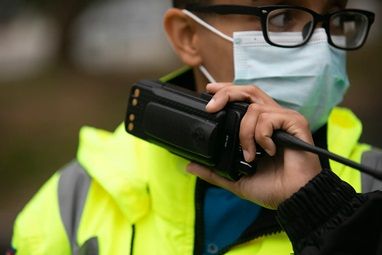
California lawmakers are considering new requirements for private security guards that would increase hands-on training, including de-escalation, as supporters and the security industry clash over the potential cost and impact on public safety.
Senate Bill 1203, authored by Los Angeles-area state Sen. Lola Smallwood-Cuevas, would require security guards to receive at least eight hours of hands-on de-escalation training each year beginning in 2028. Employers would pay for the training, which generally would have to be provided by approved outside organizations rather than private security companies themselves. If passed, the bill also would require the Industrial Welfare Commission to establish a minimum wage and other workplace standards for security workers.
Smallwood-Cuevas said security guards increasingly encounter people experiencing mental health crises or substance-use disorders, sometimes before police arrive. She said current training can rely heavily on videos and does not necessarily give workers real-world, in-person practice.
“Now more than ever, what those workers are facing are individuals who are struggling with substance abuse disorder, struggling with mental health crises,” Smallwood-Cuevas said.
She said the proposed training would be scenario-based and focus on de-escalation, with input from mental health, substance-use and conflict-diversion professionals.
The bill initially was motivated in part by the upcoming Los Angeles Olympics and the increased security demands surrounding the Games and subsequent visitors, Smallwood-Cuevas said. An amendment delayed development of the training component by two years, meaning it would not be in place for the Olympics themselves.
“It ensures that we are investing in this workforce, which is largely men of color, young black men and young Latino men; why shouldn’t they get better training? Especially at a time where we have a difficult time finding a feeder system into our police force. This is the way we do it, by putting real training on the table,” Smallwood-Cuevas said.
The security industry has opposed the bill. David Chandler, president of the California Association of Licensed Security Agencies, Guards and Associates, said SB 1203 could increase costs. “SB 1203 for us, it’s going to increase costs by over $2 billion, making security unaffordable,” Chandler said. Chandler said higher labor costs could lead businesses to reduce the number of guards they employ, rely more heavily on cameras, artificial intelligence and other technology, use untrained workers or stop using security altogether