


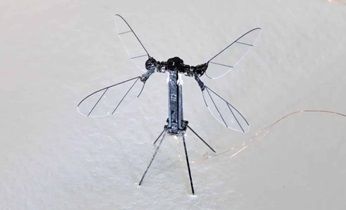
In a remarkable breakthrough for military technology, China’s National University of Defence Technology (NUDT) has developed a drone the size of a mosquito. This tiny, covert surveillance tool marks a significant leap in the realm of military drones and aligns with the broader strategy of modernizing the People’s Liberation Army (PLA), as detailed in recent reports by South China Morning Post.
The micro-drone is designed for discrete operations in complex or high-risk environments, offering an advanced method for intelligence gathering, reconnaissance, and special operations.
These developments reflect China’s ongoing investments in drone warfare, a growing trend of massed drone deployments that aim to solidify the nation’s technological superiority in the battlefield.
The tiny drone’s most notable feature is its size, which makes it highly stealthy and difficult to detect, even in environments where traditional UAVs would be too large. The drone’s wings flap like those of an insect, enhancing its ability to fly undetected while remaining agile enough to maneuver in tight spaces.
Miniaturization in military technology is not new, but the mosquito-sized drone takes it to a new extreme. As smaller UAVs become an increasingly important aspect of modern warfare, China’s latest innovation could serve as a game-changer for espionage and tactical reconnaissance.
The tiny drone, with its unique flapping wings and hair-thin legs, is designed for covert surveillance in urban environments, where traditional drones might be too large to operate discreetly. These microdrones could infiltrate spaces where enemy forces are concentrated, providing real-time intelligence without drawing attention to their presence.
The successful development of these microdrones comes after years of research and development, showcasing China’s ability to push boundaries in the field of robotics. The significance of such technology lies in its potential to perform functions that are critical for modern military operations, from gathering intelligence to conducting tactical strikes in environments that are difficult for larger vehicles to access.