


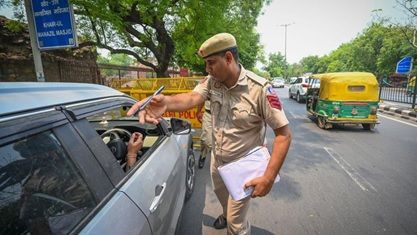
The Delhi Police’s special cell has found serious security lapses at more than 120 locations across the capital during a massive five-day security audit launched ahead of Independence Day, officials said. The audit covered high-end hotels, metro stations, malls and cinema halls, among others, and found that management was either negligent or did not comply with standard security protocols, they added.
A senior special cell officer, requesting anonymity, said that the most glaring security lapse was found at a prominent five-star hotel where 22 CCTV cameras were non-functional.
“Despite repeated instructions to fix the surveillance system, the management allegedly ignored the directive, leaving blind spots across crucial entry and exit points. Such laxity puts public safety at serious risk, especially in the run-up to August 15 when Delhi becomes a high-alert zone. Ignoring security advisories is not just careless, it’s dangerous,” the officer said, noting that the hotel could face strict action under applicable regulations.
He said that several metro stations also lacked adequate provisions for women’s safety.
“Checks revealed that the CCTV system at some stations was not up to the mark and the female security personnel were either not deployed in adequate numbers or at all. These findings have prompted officials to issue fresh instructions to the Delhi Metro Rail Corporation (DMRC) to bolster surveillance and improve emergency response mechanisms, particularly during peak hours,” he added.
A second special cell officer, who was involved in the security audit, said that many shopping malls, often crowded, had security lapses. “Many malls had not installed boom barriers or X-ray baggage scanners at entry points. Instead, basic metal detectors were being used, offering minimal deterrence to those with ill intent. Our security audit teams noted that the absence of these essential systems increases the risk of unauthorised entry and contraband smuggling. In the present scenario, where threats can manifest at any location, it is unacceptable that malls are still treating security as an afterthought,” the second officer said, requesting anonymity.
The audit found that several hotels did not have a fire response plan or had not updated details of their current staff and guests. In many cases, guest records were not properly maintained or shared with local police stations – a standard requirement for all commercial accommodations.
According to the audit report, the most lapses were found in the northeast district (16), followed by east (13, of which Shahdara alone accounted for 12). Other districts where significant shortcomings were recorded include southeast (11), southwest (10), west (10), outer (9), central (9), north (8), Rohini (7), and south (6).
“This data has been shared with senior officials, and district-level commanders have been tasked with ensuring prompt rectification. We conducted these inspections based on prior intelligence alerts regarding potential threats around Independence Day celebrations and they were undertaken in coordination with local police, fire services, and intelligence agencies to evaluate the ground-level readiness of critical infrastructure,” the first officer cited above said. The second officer cited above said that the audit findings will be compiled into a detailed report and forwarded to the Ministry of Home Affairs and the Delhi lieutenant governor’s office