


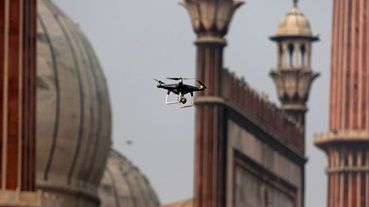
Delhi Police is set to induct 32 high-tech surveillance drones – each worth around ₹30 lakh – into its operations across the Capital’s 15 police districts and specialised wings such as the traffic unit, senior officials have said. The move marks a significant upgrade in the force’s surveillance and emergency response capabilities.
Officials said the drones, part of a larger plan to eventually acquire over 100 unmanned aerial vehicles (UAVs), will be used to monitor sensitive zones, aid in managing public order during protests or large gatherings, and assist in emergencies. “This is just the beginning. The drones will be a key tool in both routine policing and high-risk situations,” said a senior officer, requesting anonymity.
Each drone will come equipped with high-definition zoom cameras, night-vision functionality, and AI-powered tracking systems capable of identifying and following moving objects – crucial for real-time monitoring in dense urban environments. “The supplier will also train designated officers in drone operation and safety. These drones will only be effective if handled professionally,” the officer added.
Drone surveillance is not new to Delhi Police, which first deployed UAVs in 2014 during the Trilokpuri unrest. Since then, drones have been used during the 2020-21 farmers’ protests at Delhi’s borders, to enforce Covid-19 lockdown restrictions, and to gather real-time visuals during the 2020 northeast Delhi riots – particularly useful in navigating narrow lanes.
With growing reliance on drones, however, comes the need to counter potential security risks from unauthorised or malicious UAVs. “Urban airspace now sees significantly more drone activity, which raises the threat of rogue drones,” said another senior officer. “To counter this, anti-drone or counter-UAV (C-UAS) systems are essential.”
Such systems detect, track, and neutralise hostile drones using radar, RF (radio frequency) sensors, and electro-optical or infrared (EO/IR) surveillance to identify aerial threats day or night. For neutralisation, options include jamming drone communication, GPS spoofing, or physically disabling drones with nets or directed energy weapons.
The second officer said that anti-drone technologies are particularly vital for safeguarding critical infrastructure – airports, power grids, military bases – and ensuring public safety during large gatherings. As drones become cheaper and more accessible, the challenge of hostile UAVs looms large. “Law enforcement agencies must therefore balance expansion in drone use with a robust strategy to defend against misuse,” the officer said