


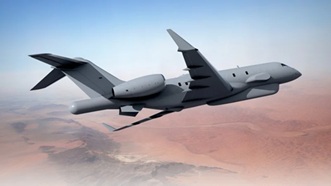
In a significant development for India’s aerial surveillance capabilities, the Defence Research and Development Organisation (DRDO) has finalised the Bombardier Global 6500 business jet as the designated platform for the nation’s new Intelligence, Surveillance, Target Acquisition, and Reconnaissance (ISTAR) programme. This strategic decision marks a critical step forward in bolstering the Indian Air Force’s (IAF) ability to monitor vast battlefields in real-time.
By selecting a modern, long-range aircraft to host indigenous sensors, India is moving to bridge critical gaps in its electronic and optical intelligence gathering along volatile borders.
The progression of this deal follows the approval granted by the Defence Acquisition Council (DAC) earlier this year on July 3, 2025.
Chaired by Defence Minister Rajnath Singh, the DAC cleared the procurement of three advanced ISTAR aircraft under a broader modernisation package valued at over ₹1.05 lakh crore.
The project is being executed under the ‘Buy Global’ category, which allows for the purchase of the foreign flying platform while mandating that the sensitive sensor suite and intelligence systems be developed and integrated domestically.
Following a comprehensive evaluation process that prioritised endurance and high-altitude performance, the Global 6500 was chosen over its competitors to meet the urgent operational requirements of the IAF, with delivery expected within five years of the contract signing.
The selection process witnessed a competitive standoff between the Bombardier Global 6500 and the Gulfstream G550, both of which are renowned for their adaptability in military roles. The Gulfstream G550 has long been a preferred choice for special missions globally, serving as the backbone for airborne warning systems in countries like Israel and Italy.
However, the production line for the G550 was closed in 2021, which raised concerns regarding long-term maintenance and the availability of spare parts. This obsolescence factor played a crucial role in tilting the decision in favour of the newer Bombardier platform, ensuring that the IAF’s fleet remains sustainable for decades to come.