


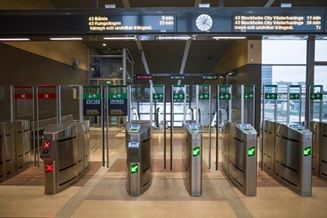
Europe’s long-delayed Entry/Exit System (EES) officially starts rolling out on October 12, marking a major change in how non-EU travelers enter and leave the Schengen Area.
The system now requires all non-EU visitors to register their fingerprints and facial images when crossing into Europe’s passport-free zone.
This new EU-wide biometric database will gradually replace manual passport stamps, digitally tracking travelers’ movements across 29 countries. The EES is set to be fully operational by April 10, 2026.
Under the new system, travelers from outside the EU and Schengen Area must scan their passports, provide fingerprints, and have a facial photo taken when they first arrive.
These details will be stored for three years, creating a digital record linked to each traveler’s identity and passport. Children under 12 still need to register but only have to provide a photo. There are no fees for EES registration.
The European Commission said that the system aims to “modernize border management, strengthen security, and detect overstayers” by automatically tracking the 90-day limit for visa-free stays within any 180-day period. It also replaces manual passport stamping, which critics have long called slow and error-prone.
The system covers all non-EU citizens entering the Schengen Area, which includes 25 EU countries plus Iceland, Norway, Switzerland, and Liechtenstein. Ireland and Cyprus are not part of it and will keep using manual passport checks.
British travelers, now treated as third-country visitors after Brexit, are among those most affected. People from visa-free countries—including the UK, the United States, Canada, Japan, and Australia—must complete EES registration the first time they enter the Schengen Zone after the rollout. For frequent travelers, the system is meant to make future trips faster. After the first registration, later crossings will only need facial recognition instead of repeating the full process.
EES registration points will be set up at all international airports, seaports, and major land borders entering the Schengen Area. In the United Kingdom, travelers will register when departing from the Port of Dover, the Eurotunnel terminal in Folkestone, or the Eurostar terminal at London St Pancras, where French border police handle exit checks.
At these UK terminals, travelers’ biometric data will be collected before boarding. When they arrive in France, they won’t need to register again until they leave the EU. Although the system officially launches today, the EU is rolling it out over six months to prevent long border delays.
The European Agency for the Operational Management of Large-Scale IT Systems (eu-LISA) confirmed that all 29 participating countries are technically ready, but each will implement it differently. Estonia, Luxembourg, and the Czech Republic are starting full operations this weekend, registering all non-EU travelers from day one.
“In Estonia, the system will be implemented at all border crossing points at the same time,” said Katre Vahtra from the Estonian Ministry of the Interior. “In the first few weeks, there may be longer queues than usual, but this is a natural part of launching such a major system change.”
Other countries, like the Netherlands, are taking a gradual approach. Amsterdam’s Schiphol Airport will begin a limited launch on November 3, with broader expansion planned for December. Seaports and smaller airports will follow in early 2026. This transition period lets border agencies use both manual and digital systems while adjusting staff and technology.