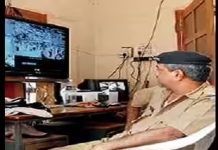



Between 2020 and 2024, around 300-500 CCTV cameras inside Delhi Metro trains were found to be non-functional each year. During the same period, no case of sexual assault and harassment was reported through CCTV cameras to the Metro Unit.
This data was shared by the Delhi Metro Rail Corporation (DMRC) and DCP (Metro) in response to two RTIs filed by Mishthi Khurana and Yashika Jain, principal investigators of a study on women’s safety in the Delhi Metro.
According to the DMRC’s reply, 479 in-train cameras were found non-functional in 2020, 432 in 2021, 503 in 2022, 337 in 2023 and 406 in 2024. In the response, the DMRC also said trains undergo regular inspections before entering service and that faulty cameras are repaired or replaced during the process. As for CCTV cameras at stations, it said, “the information is not available in any material form”.
Data from the DCP’s office shows that 90 cases of sexual assault and harassment against women in the Metro were registered between 2020 and 2024. These include four cases of rape, 68 of molestation, 11 of eve-teasing and 7 cases under the POCSO Act. The response also states that “no case has been reported through CCTV cameras in Metro Unit, Delhi.”
The women’s safety report, ‘Between Stations’, was launched recently at the HAQ Summit 2025, titled ‘Her Right to Roam’, at Pragati Maidan’s Crafts Museum. “This year’s theme focuses on public safety and accessibility for women, reimagining how cities can become spaces of freedom, not fear,” said Aanya Wig, founder of the NGO, Her Haq.
The report is based on an analysis of the RTI responses, spot checks at stations, interviews of 10 staff across Metro stations, and around 70 women in the age group of 18 to 30 who have used the Delhi Metro.
It covered 18 stations across multiple lines, including Rajiv Chowk, Kashmere Gate, Vishwavidyalaya, Hauz Khas, Lajpat Nagar, Durgabai Deshmukh South Campus, Shahdara and Janakpuri East. The aim was to capture a range of commuter experiences, from high-footfall interchange hubs to stations previously flagged for safety or connectivity issues.
Among its key recommendations, the report calls for quarterly internal and annual external safety audits involving CISF and Delhi Police Metro Unit teams; standardised signage for helplines and reporting points; a QR code-based complaint system that allows commuters to alert control rooms instantly; consistent deployment of women staff across all time bands; and better lighting and last-mile connectivity audits around Metro stations. It also urges DMRC to make safety audits and aggregate incident data public to build greater accountability.