


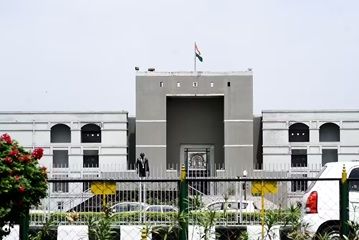
The Gujarat government has informed the Gujarat High Court that comprehensive changes to the Comprehensive General Development Control Regulations (CGDCR) are imminent, as the state prepares to host international showcases like Commonwealth Games 2030 in Ahmedabad. The state’s assurance came during a public interest litigation (PIL) hearing triggered by the devastating Rajkot TRP Game Zone tragedy and the Shrey Hospital fire.
A division bench of Chief Justice Sunita Agarwal and Justice D.N. Ray took a tough stand on systemic gaps in fire safety enforcement, directly questioning the state over vacancies and the lack of a permanent director for the Gujarat State Fire Prevention Services.
Advocate Amit Panchal, appearing in person, drew the court’s attention to critical regulatory oversights in current building and safety norms. Under existing regulations, fire No-Objection Certificates (NOCs) are not required for firecracker shops smaller than 500 square metres, nor are fire safety inspections mandatory for balwadis or playgroups catering to children under four years old.
Panchal warned that leaving early-childhood centres and small firecracker outlets unregulated creates severe risk, cautioning that a single failure could trigger another fatal disaster. Confronted with these gaps, the state government promised the bench that a permanent Fire Services Director would be appointed shortly.
Responding to concerns over urban readiness, government counsel assured the bench that the upcoming CGDCR framework will introduce strict structural reforms for high-rise developments. Under the proposed regulations, high-rise buildings will be mandated to leave an entire floor empty after every three floors to serve as refuge platforms during emergencies, simplifying evacuation and rescue operations.
The High Court also directed authorities to conduct regular, unannounced fire mock drills in crowded public spaces on working days to test actual response times. Clarifying the administrative hierarchy, the state government outlined a three-tier fire service structure, emphasizing that Municipal Commissioners remain directly accountable for local recruitment and fire safety compliance across municipal corporations.