


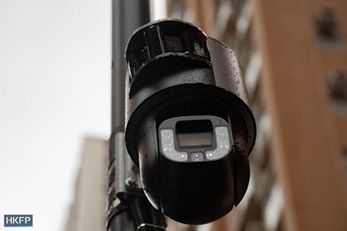
Hong Kong police may gain access to surveillance footage from government departments and the railway operator, which would be included in its “SmartView” CCTV programme, according to media reports.
The police force is considering gaining access to video surveillance feeds from the Leisure and Cultural Services Department, the Transport Department, and the Housing Department, as well as the MTR Corporation (MTRC) within the year, local media reported, citing unnamed sources.
The SmartView programme is an initiative, implemented by the police in collaboration with government departments, to install closed-circuit televisions (CCTVs) in public places with high crime rates and pedestrian flow to prevent and help fight crime.
In a response to enquiries from local media, including Ming Pao newspaper, the MTRC said that it would comply with the orders to hand over footage to the police for law enforcement purposes and “to maintain public safety of the railway network.”
In the case of any changes from existing arrangements, the MTRC will conduct a Privacy Impact Assessment to ensure it complies with laws and regulations, it said. According to a 2013 report published by the Office of the Privacy Commissioner for Personal Data, the city’s privacy watchdog, the MTRC had 3,342 cameras in stations and 429 cameras fitted in 78 of its 347 trains.
Local paper Sing Tao reported on Sunday that police officers with inspector-level authorisation would have direct access to government departments’ and the MTRC’s surveillance footage for investigation purposes.
The police are also mulling the use of artificial intelligence (AI) to better identify suspects, with a source comparing such a policy to the UK’s use of facial recognition software.
HKFP has reached out to the rail operator, the police, and the government departments for comment.
The push for surveillance access comes amid a broader police drive to install up to 7,000 surveillance cameras citywide by 2027. Having installed more than 600 cameras last year, the force aims to install a total of 1,385 by the end of 2025.