


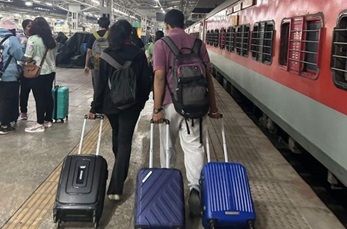
Indian Railways is preparing to introduce stricter baggage regulations resembling airport security protocols, starting soon at several major stations across the country. The new rules will enforce baggage weight limits according to class of travel-70 kg free for First AC passengers, 50 kg for AC Two Tier, 40 kg for AC Three Tier and Sleeper Class, and 35 kg for General Class.
Passengers must have their luggage screened and weighed before accessing the platform, and excess or oversized baggage will incur fines. Officials emphasise these efforts aim to enhance passenger safety, reduce congestion, and boost operational efficiency, though some travellers express concern over potential inconveniences and added costs.
Indian Railways is adopting a more rigorous and uniform approach to baggage handling, one that mirrors airport standards for security and passenger comfort. This move includes deploying electronic weighing machines at key stations such as Prayagraj, Kanpur, Mirzapur, and Aligarh to verify luggage weight.
As per Railway Board directives, each ticket class will have a prescribed baggage limit-First AC passengers can carry up to 70 kilograms of free baggage allowance, AC Two Tier 50 kilograms, while AC Three Tier and Sleeper Class passengers are limited to 40 kilograms, and General Class travellers up to 35 kilograms. Items exceeding the standard limits but within marginal allowances will incur regular excess charges, while exceeding them further may attract fines.
Senior Divisional Commercial Manager Himanshu Shukla explained the rationale: “This policy will prevent overcrowding by ensuring that passengers enter platforms with permissible luggage only. It will also streamline boarding processes and reduce delays caused by oversized or excess baggage.”
Exemptions are in place for bicycles and scooters brought aboard trains, which won’t count toward the free baggage limit. As stations upgrade weighting infrastructure and station staff receive training, the railways expect smoother baggage management and improved overall passenger experience.
Indian Railways has faced longstanding challenges with unchecked baggage across the network, frequently resulting in overcrowded compartments, security vulnerabilities, and safety risks. Baggage limits previously varied by train or route, often unevenly enforced, allowing conditions where passengers carried excessive or bulky items without scrutiny. With rising passenger volumes and heightened security awareness in recent years, the railways recognised an urgent need to tighten controls and modernise baggage management protocols.
The baggage policy overhaul aligns with the larger vision of upgrading railway infrastructure and services under government schemes like the redevelopment of Prayagraj Junction and other significant hubs into world-class facilities. Among proposed improvements are smarter ticketing and controlled platform access, which, from December 2026, will require presenting a valid train ticket to enter platforms. The baggage policy reform is a complementary measure, intended to prevent bottlenecks and elevate security to global public transport standards.