



In the Army, we had access to the most advanced surveillance feeds, satellite imagery, and real-time intelligence systems available. We could see movement across terrain in remarkable detail. We could track heat signatures, monitor logistics flows, and interpret patterns from thousands of data points simultaneously.
But one thing was always clear: a live drone feed is not the battlefield.
It shows movement. It does not show morale.
It captures data. It often misses intent.
That distinction is critical. Because today, as Artificial Intelligence reshapes industries and decision-making structures, we find ourselves in a similar moment. AI can process more information than any human team. It predicts outcomes, summarizes reports, drafts emails, builds strategy decks, and synthesizes 200-page documents before your coffee cools. It even sounds confident while being completely wrong.
Which means leadership is no longer about having answers.
It is about knowing which answers not to use.
In military operations, information was rarely the problem. There was always more of it than we could absorb. The real challenge was clarity. And clarity, especially under pressure, was rare. Calm judgment was rarer still.
That has not changed in the corporate or public leadership space.
Today’s dashboards glow with real-time metrics. Risk models update continuously. Predictive analytics promise foresight. AI can optimize a supply chain, detect anomalies in financial systems, flag compliance gaps, and recommend strategic alternatives in seconds. But it cannot sense hesitation in a boardroom. It cannot detect the quiet resistance of a team that does not believe in a direction. It cannot fully grasp the moral weight of a decision that affects livelihoods, safety, or public trust.
It can analyze risk.
It cannot own the consequences.
This is where the illusion of technological superiority can become dangerous. The presence of high-resolution intelligence never eliminated uncertainty in the field. It simply shifted the nature of uncertainty. Leaders still had to interpret intent. They had to assess morale. They had to decide whether a pattern on a screen represented opportunity, threat, or noise.
AI does not eliminate uncertainty. It accelerates it.
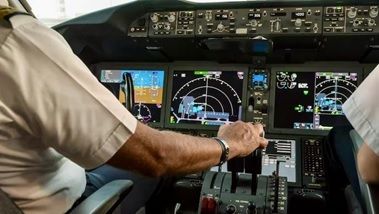 When autopilot systems manage an aircraft in steady conditions, passengers feel reassured by technology. But when turbulence hits, no one looks toward the software update. They look for the captain. They look for the calm voice on the intercom. They look for the human who carries accountability.
That is leadership in 2026.
The real competitive edge will not be IQ. Machines already outperform humans on raw data processing. The edge will be what I call DQ — Decision Quotient.
Decision Quotient is the ability to make sound judgments under ambiguity, pressure, and incomplete information. It is the discipline to pause when urgency tempts haste. It is the courage to override a model when ethical intuition signals discomfort. It is the clarity to separate what is measurable from what is meaningful.
In a world where AI lowers the barrier to technical competence, character becomes the differentiator.
This is a profound shift. Historically, leaders distinguished themselves through superior knowledge, faster analysis, or broader access to information. Today, AI democratizes expertise. A mid-level manager can generate sophisticated financial models. A young analyst can produce polished strategy presentations. A startup founder can simulate market forecasts once available only to large corporations.
When competence becomes widely accessible, leadership must evolve.
The best leaders in the AI age will ask sharper questions than the algorithm. They will not be impressed merely by outputs. They will interrogate assumptions, understand training biases, and test scenarios beyond the dataset. They will remain calm when dashboards turn red, recognizing that panic amplifies error. They will use AI for speed, but apply wisdom for direction.
Efficiency, though essential, will not be sufficient. Ethical balance will matter more than ever. AI systems can recommend workforce reductions for cost optimization. They can prioritize markets purely on profitability. They can score customers and employees through predictive models. But leadership must decide how those efficiencies align with long-term values, culture, and societal responsibility.
Not everything measurable is meaningful.
Morale does not always show up in metrics. Trust does not sit neatly in spreadsheets. Reputation cannot be fully captured in quarterly dashboards. Yet these intangible factors often determine resilience in crisis.
 In every crisis I have witnessed, whether operational, organizational, or strategic, people did not follow the smartest system. They followed the calmest human. They followed the leader who absorbed complexity without transmitting panic. They followed the individual who accepted responsibility rather than deflecting it toward process, protocol, or technology.
AI may continue to democratize expertise. It will not replace accountability.
And that is why the conversation about artificial intelligence must expand beyond productivity gains and efficiency ratios. The deeper question is how we cultivate leaders who can partner with AI without surrendering judgment to it. How we ensure that automation does not erode ownership. How we preserve human discernment in an era of algorithmic confidence.
The future will not belong to those who resist AI, nor to those who blindly trust it. It will belong to those who understand its strengths, respect its limitations, and anchor decisions in human responsibility.
A drone feed is powerful. But it is not the battlefield.
An algorithm is fast. But it is not wisdom.
As we step further into the AI decade, the defining capability of leadership will not be the ability to access answers instantly. It will be the maturity to decide which answers deserve action, and which demand restraint.
That is the Decision Quotient. And that will define the leaders who endure.
The author is the Senior Director Security – SCO at DP World