


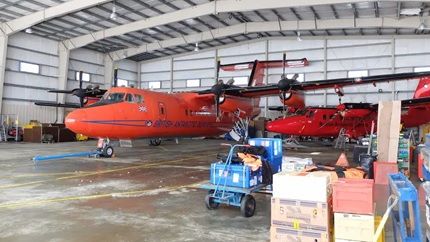
Aircraft hangars and maintenance facilities house assets worth millions of dollars, from specialized tooling and precision equipment to complete aircraft and genuine OEM parts. While major airports invest heavily in perimeter security, smaller regional airports and private aviation facilities face significant vulnerabilities.
Aviation theft has evolved from opportunistic break-ins to organized operations targeting high-value components. For MRO operators, independent maintenance shops, and private hangar owners, implementing layered security systems protects physical assets while maintaining commercial aviation insurance compliance and demonstrating operational integrity to clients.
Modern security technology offers maintenance facilities and hangar operators comprehensive protection that extends beyond theft prevention. These systems support regulatory compliance documentation, provide evidence for insurance claims, monitor safety protocols, and ensure that maintenance operations meet aviation industry standards.
The physical layout of aircraft hangars provides both advantages and challenges for security implementation. High ceilings, open floor plans, and limited access points allow strategic camera placement to monitor large areas effectively. However, the scale of these facilities requires careful planning to eliminate blind spots.
External coverage should focus on entry points, vehicle access routes, and perimeter areas. Pan-tilt-zoom (PTZ) cameras track movement across the facility exterior, recording vehicle registrations and documenting all arrivals and departures. This creates an audit trail essential for both security and operational management.
Internal surveillance concentrates on work areas, parts storage locations, and tool cribs where high-value items are kept. Fixed cameras monitor main entry points while additional units cover aircraft positions and maintenance bays. Modern systems integrate with existing facility management software used by many aircraft maintenance companies.
Specialized camera types address specific aviation facility requirements:
- Vandal-resistant housings protect equipment in accessible areas
- Wireless systems reduce vulnerability to tampering and simplify installation in existing structures
- Explosion-protected cameras maintain coverage in fuel storage areas and other hazardous locations
- Low-light and thermal imaging provide 24/7 visibility regardless of lighting conditions
- Secure equipment storage cases complement camera surveillance by physically protecting sensitive tools and instruments – rugged industrial cases ensure precision equipment remains tamper-proof, damage-free, and accountable even in the most demanding hangar environments.
- LiDAR (Light Detection and Ranging) sensors are highly effective for securing aircraft hangars. They provide centimeter-level 3D mapping, establishing invisible virtual barriers that trigger alarms only when unauthorized objects of specific sizes breach designated perimeters.
- Optical Flame Detectors (UV/IR or IR3) or Intelligent Visual Flame Detectors (iVFDs) are the newer options to protect aircraft hangars, as traditional smoke and heat detectors act too slowly in massive, drafty hangars. Advanced optical and visual sensors provide rapid detection of highly combustible jet fuel fires while preventing costly false alarms.
 Cloud-based monitoring platforms centralize security management, enabling remote oversight by facility managers, security personnel, and executives. These systems generate automatic alerts for unauthorized access, unusual activity patterns, or equipment tampering. For multi-site operators, centralized monitoring reduces security costs while maintaining consistent oversight across all locations.
Airport location often provides a false sense of security for many hangar operators. While airport perimeter fencing and security patrols offer some protection, individual facilities may require additional dedicated security measures within their leased or owned space. This layered approach significantly increases security effectiveness.
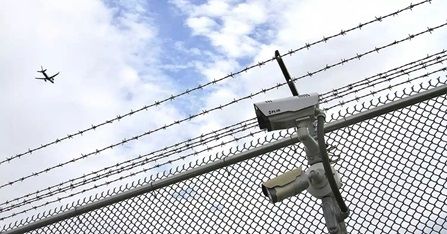
Physical barriers form the first line of defense. Anti-climb fencing around the immediate facility perimeter creates a clear security boundary. Combined with proper lighting and clear signage indicating advanced security systems, these barriers deter opportunistic criminals while delaying organized operations long enough for detection and response.
Smart sensors and detection systems integrate with camera networks to provide immediate alerts. Motion sensors, fence line detection, and infrared beams trigger notifications and recording when perimeter breaches occur. This technology enables security personnel or neighboring facilities to respond before intruders reach high-value areas, helping to limit opportunist criminals who target aviation facilities.
Security technology serves dual purposes in aviation maintenance environments. Beyond asset protection, modern systems enhance worker safety in facilities where employees work with heavy equipment, elevated platforms, and potentially hazardous materials.
Worker-down detection uses video analytics and smart sensors to identify when personnel experience falls, become trapped under equipment, or suffer medical emergencies. Immediate alerts enable rapid response, potentially preventing serious injuries from becoming fatalities. This capability addresses OS&H requirements while demonstrating genuine care for employee welfare.
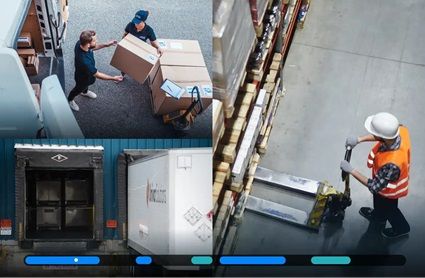 Zone monitoring tracks personnel movement through restricted or hazardous areas. Systems can detect if workers enter confined spaces without proper authorization, operate equipment outside normal hours, or work alone in areas that require a safety partner. These features support compliance with aviation safety regulations and internal safety protocols.
Within secured hangars, additional access restrictions protect the most valuable equipment and materials. Layered security extends from facility perimeter to specific storage areas, creating multiple barriers that thieves must overcome.
Electronic access control replaces traditional keys and padlocks with systems that provide accountability and flexibility. Card readers or biometric scanners on parts cages, tool rooms, and specialized equipment areas ensure that only authorized personnel access these locations. Access credentials can be quickly updated when personnel changes occur, eliminating re-keying costs.
Audit trails generated by access systems document who entered protected areas and when. This data supports inventory management, identifies internal theft risks, and provides evidence during investigations. For MRO facilities maintaining regulatory compliance, these records demonstrate proper parts control and traceability.
Time-based restrictions allow access control systems to automatically limit entry during non-working hours. Managers can authorize specific personnel for after-hours access while restricting others, balancing operational needs with security requirements. Systems can trigger additional alerts when access occurs outside normal parameters.
Integration with inventory systems creates comprehensive asset tracking. When access control connects with parts management software, facilities gain visibility into who removed items, when they were taken, and for which work orders. This integration reduces parts shrinkage and improves operational efficiency.
 While access control systems represent significant investments, they deliver measurable returns. Smaller maintenance operations that implement enterprise-grade security demonstrate professionalism that wins contracts from larger aviation clients. The systems pay for themselves through reduced theft, lower insurance premiums, and increased business opportunities.
Even comprehensive security systems require periodic evaluation to maintain effectiveness. Threat landscapes evolve, facility operations change, and equipment ages. Regular assessments identify vulnerabilities before criminals exploit them.
Professional security consultations provide objective analysis of facility protection. Airport security personnel often offer complimentary assessments, sharing insights from their experience with theft patterns and criminal methods. Their external perspective identifies blind spots that facility staff might overlook through familiarity.
Red team exercises are an important method for evaluating the real-world effectiveness of security systems through controlled penetration attempts and simulated threat scenarios. Facility managers should periodically assess their premises from the perspective of a potential intruder, critically examining how criminals might attempt to access or exploit vulnerabilities within the facility. This process involves identifying which assets would be both highly valuable and relatively easy to steal, determining whether certain areas fall outside effective camera surveillance, and assessing whether unauthorized access could occur during non-operational hours without detection. Equally important is evaluating how quickly security personnel would respond to alarms or suspicious activity and whether employees consistently comply with established access control procedures. Such exercises help organizations identify weaknesses proactively and strengthen overall security preparedness before an actual incident occurs.
Visible security measures are known to deter a large percentage of opportunistic crimes, but organized adversaries often continue searching for exploitable weaknesses. Regular security audits, testing and maintenance therefore remain essential to ensure systems function effectively and vulnerabilities are identified before they lead to losses.
Security infrastructure also requires continuous upkeep, including software updates, camera calibration and backup testing, while employee training plays a crucial role in reinforcing access control and incident reporting protocols. Together, technology and trained personnel create a stronger and more resilient security environment.
For aviation maintenance facilities and hangars, investment in security goes far beyond theft prevention. Strong security standards reflect operational professionalism, strengthen customer confidence and increasingly influence contract decisions. Modern systems additionally provide valuable operational data that can improve staffing, facility utilization and business planning.
Comprehensive security capabilities also support emergency response, business continuity and insurance processes during severe weather or other disruptions. At the same time, a secure workplace improves employee confidence and retention within the skilled aviation maintenance workforce.
Ultimately, hangar security should be viewed not as an expense, but as critical operational infrastructure that delivers long-term benefits through improved safety, resilience, efficiency and competitive advantage.