

The Ministry of Home Affairs (MHA) has announced a series of follow-up actions, including a meeting with State Controlling Authorities and inter-ministerial consultations, to address persistent challenges in the implementation of the Private Security Agencies Regulation Act 2005 (PSARA).
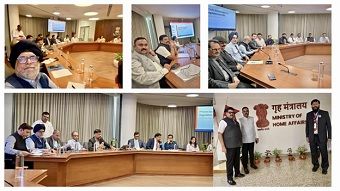
The decisions were taken during a review meeting held on March 13, 2026, under the chairmanship of Joint Secretary (Police Modernization) R. Prasanna, IAS, with participation from key industry bodies including Federation of Indian Chambers of Commerce and Industry (FICCI), Central Association of Private Security Industry (CAPSI), Security Association of India (SAI), Karnataka Security Services Association (KSSA), and others. The initiatives taken by this Ministry through issuance of advisory to State/UT controlling authorities and inter-Division/Ministry consultation) in order to resolve the various issues of private Security Association were conveyed by the DSPM-I, Ms. Kriti Garg, IAS.
Key Industry Concerns Highlighted
Stakeholders flagged several operational bottlenecks affecting the private security sector:
- Delays in licence approvals and renewals, with significant pendency reported across states
- Inconsistent implementation of PSARA provisions by State Controlling Authorities
- Non-uniform training requirements despite central guidelines
- Challenges with GST, particularly the Reverse Charge Mechanism (RCM)
- Repeated police verification processes and issues linked to Crime and Criminal Tracking Network and Systems (CCTNS)
- Delayed payments to security agencies and guards, with limited accountability for principal employers
- Labour welfare concerns, including gratuity, wages, and overtime compliance
- Operational inefficiencies, including manual submission of guard data in some states
Industry representatives also raised concerns regarding alleged corruption at the state level, duplication in compliance requirements across states, and the need for streamlined processes, including easier access to arms licences for eligible agencies.
SAl further expressed concerns regarding the private security Agencies (PSAs) rating system proposed by CAPSI, stating that such a system could adversely affect smaller agencies. In response, the Chairman clarified that no such proposal is currently under consideration by the Ministry.
MHA Response and Action Points
Acknowledging that licence pendency remains a major issue, the MHA emphasised alignment with the government’s broader vision of “Minimum Government, Maximum Governance.”
Key action points include:
- A joint meeting with State Controlling Authorities to be convened after mid-April 2026
- Inter-ministerial consultations with the Ministry of Finance and Ministry of Labour on GST and labour-related issues
- Submission of detailed proposals by industry associations on cross-ministerial concerns
- Increased digitisation, including mandatory updating of manpower data on the PSARA portal
- A stakeholder workshop in May 2026 to address issues in a structured manner
- A follow-up review meeting within three months
Push for Greater Coordination
The MHA also underlined the need for improved coordination between the Centre and States to ensure uniform implementation of PSARA provisions. While industry bodies appreciated initiatives such as the PSARA portal and model rules, they stressed that execution gaps at the state level continue to hinder ease of doing business.
The meeting is expected to pave the way for more structured reforms in the private security sector, which employs millions across India and plays a critical role in the country’s overall security architecture.