

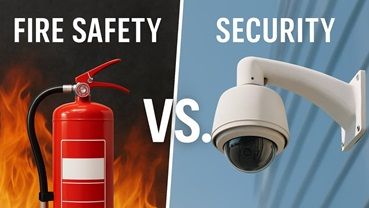
New research published by Spy Alarms has found that most businesses in the United Kingdom prioritise investment in security systems over fire safety measures. According to the company, 59% of businesses reported spending on CCTV, intruder alerts and access control. In contrast, only 39% reported investing in fire safety systems.
Spy Alarms stated that the average cost of a fire to a business is £78,000. This figure does not include potential health impacts, emotional consequences or legal implications. Spy Alarms reported three primary reasons for the gap in investment between security and fire safety: financial constraints, lack of awareness and limited internal processes.
The company said that many businesses deprioritise fire safety due to cost, despite the risk of severe consequences. It also noted that new business owners may not be aware of legal responsibilities regarding fire protection. A further issue is that some companies do not have processes in place for ongoing fire safety maintenance and training, making it difficult to implement or sustain protective systems.
Data shared by Spy Alarms and attributed to UK government sources outlined which business types are more likely to experience fires. Industrial businesses were found to be most at risk, accounting for 24% of fire incidents. Food and drink premises represented 19%, followed by retail at 17%. Hotels and hospitals were recorded at 8% and 7% respectively.
Andrew Fowler, Fire System Specialist at Spy Alarms, said it is essential for businesses to have robust and properly maintained fire systems in place. Fowler said: “As we’ve all become aware of in recent years, a well-thought-out fire plan, including sufficient and maintained systems, extinguishers and an evacuation plan supported by training, are absolute non-negotiables.”
He added: “While costs may be a concern, we offer site visits to determine the most suitable systems for our customers, from a set-up and budget perspective. “It’s crucial to put expenses for these systems into perspective by comparing them to other operational costs and considering the potential losses and consequences of a fire incident.”