


New York City lawmakers are weighing a sweeping new attempt to curb the spread of biometric surveillance in everyday life, advancing legislation that would sharply restrict the ability of businesses and landlords to collect facial scans, voiceprints, fingerprints, and other uniquely identifying data from the public.
The proposals were the subject of a lengthy hearing this week before the City Council’s Committee on Technology where council members, privacy advocates, and city officials debated whether biometric technologies have quietly expanded into retail stores and residential buildings with little oversight.
At issue were two bills that together would make New York City one of the most restrictive jurisdictions in the U.S. when it comes to private sector biometric surveillance. The push reflects a growing concern among lawmakers that the technology has moved beyond narrowly defined security uses and is beginning to reshape the way businesses monitor customers and tenants.
Councilmember Shahana Hanif, the sponsor of one of the bills, argued that biometric identifiers present a fundamentally different privacy risk than ordinary data. “You cannot cancel your face,” Hanif said during the hearing, emphasizing that biometric identifiers cannot be replaced once compromised.
The legislation responds in part to revelations that some retailers have begun experimenting with facial recognition systems designed to identify suspected shoplifters or repeat offenders.
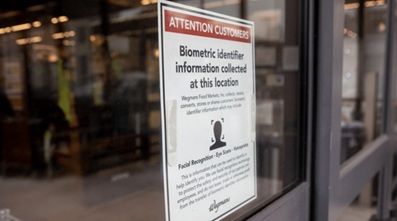
One example frequently cited by lawmakers involves grocery chain Wegmans, which has acknowledged using facial recognition technology in certain locations as part of its loss prevention strategy. Under the first proposal, businesses that qualify as places of public accommodation would be barred from using biometric recognition technology to identify or verify customers. The measure would go far beyond the city’s current rules, which mainly require businesses to post signs notifying customers if biometric information is being collected.
The bill would also expand how biometric identifiers are defined under city law. The definition would include not only fingerprints and iris scans but also voiceprints, facial geometry, and even movement patterns that could be used to identify an individual.
A second proposal introduced by Councilmember Pierina Ana Sanchez focuses on residential buildings. It would prohibit landlords from installing or using biometric recognition systems that identify tenants or their guests. Lawmakers behind the measure say the growing use of facial recognition door entry systems in apartment buildings raises serious concerns about tenant privacy and potential surveillance inside private residences. Together, the bills reflect a broader shift in the debate over biometric technology.