


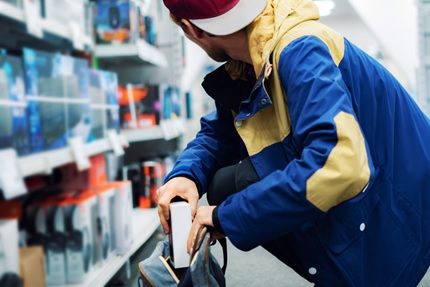
Organized retail crime (ORC) has quietly emerged as one of the toughest challenges for retail brands, costing the U.S. retail industry nearly $70 billion annually. This shocking figure highlights the efforts of crime rings put in to avoid detection.
Many ORC groups turn to online platforms such as eBay, Craigslist, and even Facebook Marketplace to sell stolen goods. In some cases, criminals also operate through hidden networks, using the dark web to facilitate illegal transactions. They use anonymity tools and cryptocurrency to obscure the origins of the products and evade detection.
Such is the devastating effect of the menace that the National Retail Federation (NRF) is urging US Congress to advance federal legislation addressing organized retail crime following the House Judiciary Committee’s markup of H.R. 2853, the Combating Organized Retail Crime Act.
In a statement, David French, Executive Vice President of Government Relations at NRF, said organized retail crime continues to affect multiple areas of the retail industry, with criminal groups exploiting vulnerabilities across the retail ecosystem for financial gain.
The legislation would establish a coordinated crime center within Homeland Security Investigations to support collaboration across jurisdictions, strengthen investigative resources and build upon progress made at the state level, according to the statement.
French said the NRF has long supported federal legislation designed to improve coordination among federal, state and local law enforcement agencies to counter organized retail crime. The organization praised House Judiciary Committee Chairman Jim Jordan and Ranking Member Jamie Raskin following the committee’s markup of the bill.
NRF submitted a letter of support ahead of the House Judiciary Committee markup. In December 2025, the organization also submitted a written statement for the record to a House Judiciary Subcommittee on Crime and Federal Government Surveillance hearing outlining the impact of organized retail crime on retailers and consumers.
According to NRF’s “The Impact of Theft & Violence 2025” report, more than half of retailers surveyed reported increases over the past 12 months in phone scams, digital and ecommerce frauds, shoplifting and merchandise theft and cargo or supply chain thefts conducted by organized retail crime groups.
 For example, in 2022, a massive ORC ring in New York stole millions of dollars worth of high end clothing, cosmetics and pharmaceutical items from retailers, which then were resold through their eBay storefronts. These criminals exploited the anonymity of e-commerce, making it difficult for authorities to trace the origin of the stolen goods.
Another common tactic employed by Organized Retail Crime (ORC) groups is tampering with retail gift cards. They use these prepaid cards to buy high-value goods such as electronics, designer clothing, and pharmaceutical items, which are then swiftly resold online, resulting in significant profits.
A significant case involved Chinese criminal organizations aiming at American retail stores such as Target and Walmart. Criminals used a tactic called “card draining” to take gift cards from a store display and then either record the card numbers and PINs or replace them with new barcodes. After resealing the packaging, they return the cards to the store for unsuspecting customers to purchase. When a customer loads money onto a tampered card, the criminal can then access the card online and steal the balance.
A Florida man, who was hired online, was arrested after being caught restocking tampered gift cards at a Target store. Another incident involved stolen gift cards to buy high-value products, such as iPhones, which are then resold overseas for significant profits.
Criminals also target vulnerable points in the supply chain, including loading docks, trucks, and front porches, known as “porch piracy.” These operations are often highly coordinated, with insiders providing detailed information on shipping routes and schedules, enabling the theft of valuable goods.
According to reports cargo theft surged by 57% year-over-year in the second quarter of 2023, with 566 reported incidents in the U.S. alone. A significant portion of these thefts occurred near warehouses, distribution centers, and unsecured parking areas, including truck stops and rest areas.
 In addition to the common practice of returning items without receipts or using fake ones, some fraudsters exploit retailers’ loopholes through “double” returns, both online and in-store. A notable case involved a multi-state fraud ring run by five sisters, who executed return fraud schemes over several years, totaling at least a million dollars.
The sisters would buy items online and request return shipping labels, then pretend to return them at a self-service kiosk in the post office, without ever mailing anything back. They received refunds for the items they falsely claimed to return and subsequently returned the same items in-store for a second fraudulent refund. Federal prosecutors indicated that the sisters traveled to multiple states to carry out these returns and evade detection.
Collaboration between retailers and law enforcement agencies is essential to prevent these sophisticated organized retail crimes, reduce shrinkage, and minimize financial losses.
Below are practical solutions to offer actionable steps in tackling Organized Retail Crime (ORC) effectively:
Leveraging Litigation and Law Enforcement
● Collaborate with Law Enforcement through Task Forces: ORC often spans multiple jurisdictions, making it challenging for retailers to tackle alone. Collaborating with law enforcement agencies provides access to greater resources to dismantle ORC networks.
● For example, the LAPD Organized Retail Crime Task Force (ORCTF) have collaborated with the Los Angeles County District Attorney’s Office and partner law enforcement agencies to tackle brazen smash-and-grabs retail theft rings. “Since the inception of our task force, we have arrested 438 suspects related to retail theft and 309 cases have been successfully filed. We are not only focused on the individuals responsible for the thefts, but those that are in the criminal chain, the getaway drivers, those that harbor them, and those that sell the stolen merchandise. These individuals need to understand that there will be consequences, we will use all our resources to identify, pursue, and arrest these suspects.” said LASD Major Crimes Bureau Acting Captain Rob Peacock.
 The FBI addresses organized retail theft (ORT) as part of its Transnational Organized Crime efforts, targeting criminal networks that operate across state or national borders to steal and resell goods, harming retailers and the economy. Retailers affected by ORT can report incidents to their local FBI field office, or submit tips online. Through collaboration with law enforcement and industry partners, the FBI seeks to dismantle these organized crime groups.
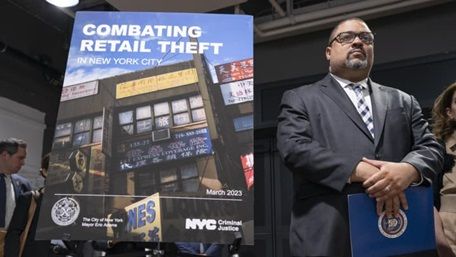
● Pursue Civil and Criminal Action: Retailers can pursue civil litigation and criminal charges against individuals or groups involved in ORC. Civil recovery laws allow businesses to recover the cost of stolen goods and legal fees, while criminal charges can lead to harsher penalties. The Combatting Organized Retail Crime Act of 2023 is a new piece of legislation that empowers law enforcement to pursue criminals involved in theft and resale of stolen goods online.
Technological Solutions
● AI-driven Solutions for Pattern Recognition and Lead Prioritization: AI is transforming the battle against organized retail crime by aggregating investigative data from both in-store and online sources. Tools like Hubstream utilize AI to identify patterns of coordinated theft and automatically prioritize crucial leads or repeat offenders. These systems provide immediate alerts to loss prevention teams, enabling them to prevent theft before it occurs.
● RFID and Smart Tagging Technology: Implementing Radio Frequency Identification (RFID) and smart tagging systems allows retailers to track high-value merchandise from the supply chain to the store shelf. Stolen goods can be more easily identified and recovered if RFID-enabled products are sold online or in physical resale shops. Large retailers like Walmart, Lululemon and Nike have integrated RFID systems into their merchandise to track and deter ORC activity.
● Blockchain for Supply Chain Security: Global retail leaders, including H&M Group, have successfully implemented blockchain solutions like Fibercoins™, enabling full traceability and management of textile products from fiber origin to retail. This approach offers a model for other retailers looking to enhance supply chain transparency and accountability.
● Enhanced Retail Security Solutions: Modern retail security solutions provide integrated loss prevention to create safer shopping environments and deter theft. Pedestrian Actuating Security Gates, a newer U.S. technology with success in Canada and Europe, direct customer flow, reduce unauthorized traffic, and prevent cart walkouts. These gates are linked to fire alarms for safety and integrate with video surveillance and Electronic Article Surveillance (EAS) systems. EAS, a retail staple, deters theft by triggering video recording if items pass through undetected, while hard and specialty tags protect high-risk products, enhancing security without restricting sales.
 ● Advanced Video Analytics and Public View Monitors: High-resolution video surveillance now allows easy deployment across retail locations, with analytics to track traffic, prevent crowding, and respond to security alerts in real-time. Integrated with POS systems, it helps detect checkout fraud, while strategically placed Public View Monitors (PVMs) deter theft around high-value items and capture visual evidence. Together, these tools enable retailers to monitor and respond to security risks proactively.
Employee Training and Industry Alliances
● Employee Training and Involvement: Well-trained employees are often the first line of defense against ORC. Training programs focused on recognizing suspicious behavior, knowing how to respond to theft incidents, and reporting to the right channels are crucial. Retailers like Home Depot have implemented organized retail crime training programs that teach employees how to spot professional theft rings and report the incidents immediately.
● Industry Alliances for Best Practices in Loss Prevention: Partnering with industry associations like the National Retail Federation (NRF) and the Loss Prevention Research Council (LPRC) enables retailers to stay informed on trends and innovative practices in loss prevention. These alliances provide access to research, tools, and networks that help retailers understand evolving threats and effective strategies for organized retail theft and loss prevention. Engaging with such groups also allows companies to share insights and contribute to advancing industry-wide solutions and standards.
The fundamental difference between general retail theft and ORC is the structure of the operation. Criminal enterprises engaged in shoplifting often have a process for stealing products that involves various assigned roles.
The style and execution of retail theft can vary as operations become more complex and sophisticated. However, the persons usually involved in an ORC operation are the following:
Coordinators
Coordinators are the individuals who organize operations, set targets, assign roles and manage the logistics behind the crimes. They are usually at the top of the hierarchy in an ORC network, responsible for the profitability of operations, making directive decisions and finding buyers.
Operatives
The operatives, also known as boosters, are the groups that conduct the planned operation by physically stealing goods, committing fraud or engaging in other actions to compromise a retail store’s security. They will act on the plan created by the coordinators, such as a smash-and-grab attack or return fraud.
Couriers
Couriers are responsible for transporting goods throughout the operation. They can serve as immediate transport for operatives after shoplifting merchandise or as part of a broader logistics network, transferring products between warehouses or wholesalers.
Fences
Fences are the names of the buyers who will purchase the stolen merchandise after the operation is complete. They will either have a network of customers already willing to buy the products or they may list the goods on online marketplaces for profit.
Support
ORC operations will have an increasingly growing support network, depending on the scale of the operation. Many operatives targeting retail centers will have persons assigned as lookouts, insider contacts, listeners and specialists in fraud or distraction. Other indirect support in an ORC network can be money launderers, forgers, security advisors and shadow finance specialists.
While combating ORC is a challenge for global retailers, advancements in technology and government legislation can enable retail centers to implement a proactive and comprehensive strategy to mitigate organized retail theft.
Security technologies that can detect unusual activity and enable swift action can help stores deter ORC attacks once consequences become apparent. With legislative support and faster response from authorities, the combined approach can be an effective tool in mitigating further incidents.