


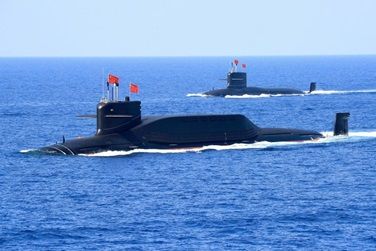
The Pentagon plans to spend an additional US$12.6 billion to improve surveillance of China’s military manoeuvres, submarines and satellites as the US tries to counter the “unprecedented Chinese military build-up” in Asia, according to a budget document sent to Congress.
The funds, approved by Congress outside the normal budget process, are designed to improve US military readiness, offensive cyber capabilities and surveillance efforts across the Indo-Pacific. It will also help expand operations of a classified Boeing spacecraft.
The China-focused expenditures are detailed in a new 85-page document sent to Congress earlier this month that spells out how the Department of Defence plans to allocate almost US$152 billion passed in last year’s massive tax-and-spending package. That is separate from the formal US$893 billion fiscal 2026 defence spending measure Congress passed in January.
The document says the new funds “are dedicated to improving critical DoD efforts in the US Indo-Pacific Command area of responsibility to counter the unprecedented Chinese military build-up and the growing threats to US security interests and economic prosperity in the region”.
The new spending and hawkish tone contrast with last month’s US National Defence Strategy, which took a softer tone on China than in years past, in line with US President Donald Trump’s calls for closer trade ties with Beijing.
The new strategy calls for deterring China “through strength, not confrontation” and is more focused on threats posed by migration and narcotics in the western hemisphere than on traditional US foes like Russia and North Korea. Still, the spending document features a variety of intelligence and surveillance improvements aimed mostly at keeping a close eye on China’s increasingly sophisticated military build-up.
It has US$1 billion to improve classified “offensive cyber operations”. There is another US$1 billion of unspecified expenditures for the US Space Force’s operation of Boeing’s classified X-37B “Orbital Test Vehicle”, although there has been little public explanation of its mission.
The document lists US$528 million to support the expansion of the Silent Barker constellation of early warning spy satellites. They are designed to track Chinese or Russian spacecraft that could disable or damage orbiting American systems.