


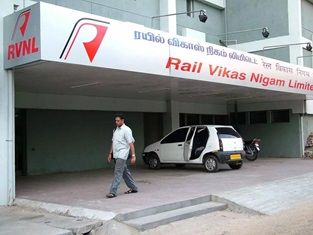
Rail Vikas Nigam Limited (RVNL), a Miniratna Category-I CPSE under the Ministry of Railways, has been awarded a significant contract worth ₹90.65 crore by Southern Railway. The contract involves the installation and enhancement of Video Surveillance Systems (VSS) at 484 railway stations across the southern network.
The scope of the project includes the installation of new VSS systems at 441 D and E category stations, and the augmentation of existing infrastructure at 43 higher-category stations (A1, A, B, and C). The move is aimed at improving passenger safety and station-level monitoring, especially in smaller and mid-tier stations that previously had limited surveillance capacity.
RVNL stated that the contract, awarded by a domestic government entity, will be executed over a span of 18 months. The project falls under the General Contract Conditions and will be implemented in the normal course of business operations. The company also clarified that there is no promoter or promoter group interest in the awarding authority, and the deal does not constitute a related party transaction.
This surveillance project aligns with Indian Railways’ broader objective of ensuring safety, security, and smarter station management through technology. Equipped with modern CCTV cameras, storage systems, and centralized monitoring, the VSS will help in real-time surveillance and post-event analysis, significantly enhancing passenger security.
The project adds to RVNL’s growing footprint in railway infrastructure development, including works in track doubling, electrification, station redevelopment, and signaling.
In a regulatory filing made on Wednesday, RVNL informed stock exchanges about the development, further strengthening investor confidence in its robust project pipeline.