


Securing India’s 2,450-km-long open international borders with Nepal and Bhutan is emerging as an increasingly complex security challenge, with the Sashastra Seema Bal (SSB) turning to facial recognition, radars, CCTV systems, drones and other modern surveillance technologies to counter new-age threats.
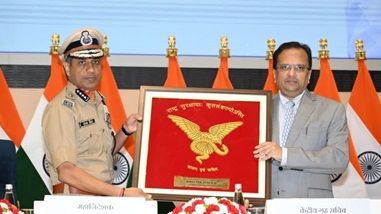
The issue took centre stage at the SSB Investiture Ceremony held in New Delhi, where Union Home Secretary Govind Mohan underlined the need for a “balanced approach” to securing the country’s friendly and open borders while facilitating large-scale legitimate movement.
Mohan said border security was an important foundation of India’s internal security and highlighted the SSB’s crucial role in securing the open borders with Nepal and Bhutan. “Maintaining a balance between security, public convenience and friendly relations amid large-scale legitimate movement across these borders is an important responsibility of the SSB,” he said.
The open nature of these frontiers makes conventional border management particularly challenging, as there are no continuous physical barriers to regulate movement. The Home Secretary appreciated the SSB’s efforts to strengthen surveillance through facial recognition systems, radars, CCTV cameras and other technological tools.
Mohan also highlighted the force’s action against human trafficking, counterfeit currency, narcotics and arms smuggling — activities that pose significant challenges along India’s open borders. Referring to a quadrilateral border security framework envisaged by the Ministry of Home Affairs, Mohan said stronger coordination among border guarding forces, state governments, Central government agencies and border communities could further strengthen border management. He said the first major meeting aimed at implementing the framework at the ground level was organised under the aegis of the SSB in the India-Nepal border region.
SSB Director General Sanjay Singhal said securing the 2,450-km open international border with Nepal and Bhutan remained one of the force’s most sensitive responsibilities, particularly because of the substantial legitimate movement across the two frontiers. He said SSB personnel were continuously taking action against narcotics, arms, counterfeit currency, human trafficking, illegal immigration and organised crime.
However, Singhal said the security environment along the borders was changing rapidly. Hybrid warfare, cyber and information warfare, drone-based threats and evolving smuggling methods are creating new challenges for border management, Singhal said.
To meet these threats, the SSB is strengthening its operational capabilities through modern surveillance systems, improved communication equipment, drones and other technological solutions. At the same time, the force is seeking to deepen its engagement with communities living along the border. Singhal said the concept of “Winning Hearts and Minds” was an integral part of the SSB’s work culture.
Through its Civic Action Programme, the force seeks to build trust among border residents while supporting development and welfare initiatives. The Vibrant Villages Programme is also being used to contribute towards secure borders, stronger frontier communities and local development.
The SSB’s role has also extended beyond conventional border guarding. Its personnel are deployed for internal security, counter-insurgency operations, Left Wing Extremism, election duties, law and order and disaster management. The force also recently undertook relief and rescue operations in the India-Nepal border region following the devastating floods in Nepal.
Union Home Minister Amit Shah, in a written message, paid tribute to 51 SSB personnel who made the supreme sacrifice in the line of duty and praised their bravery and patriotism as an invaluable legacy of the force.


