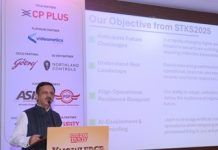


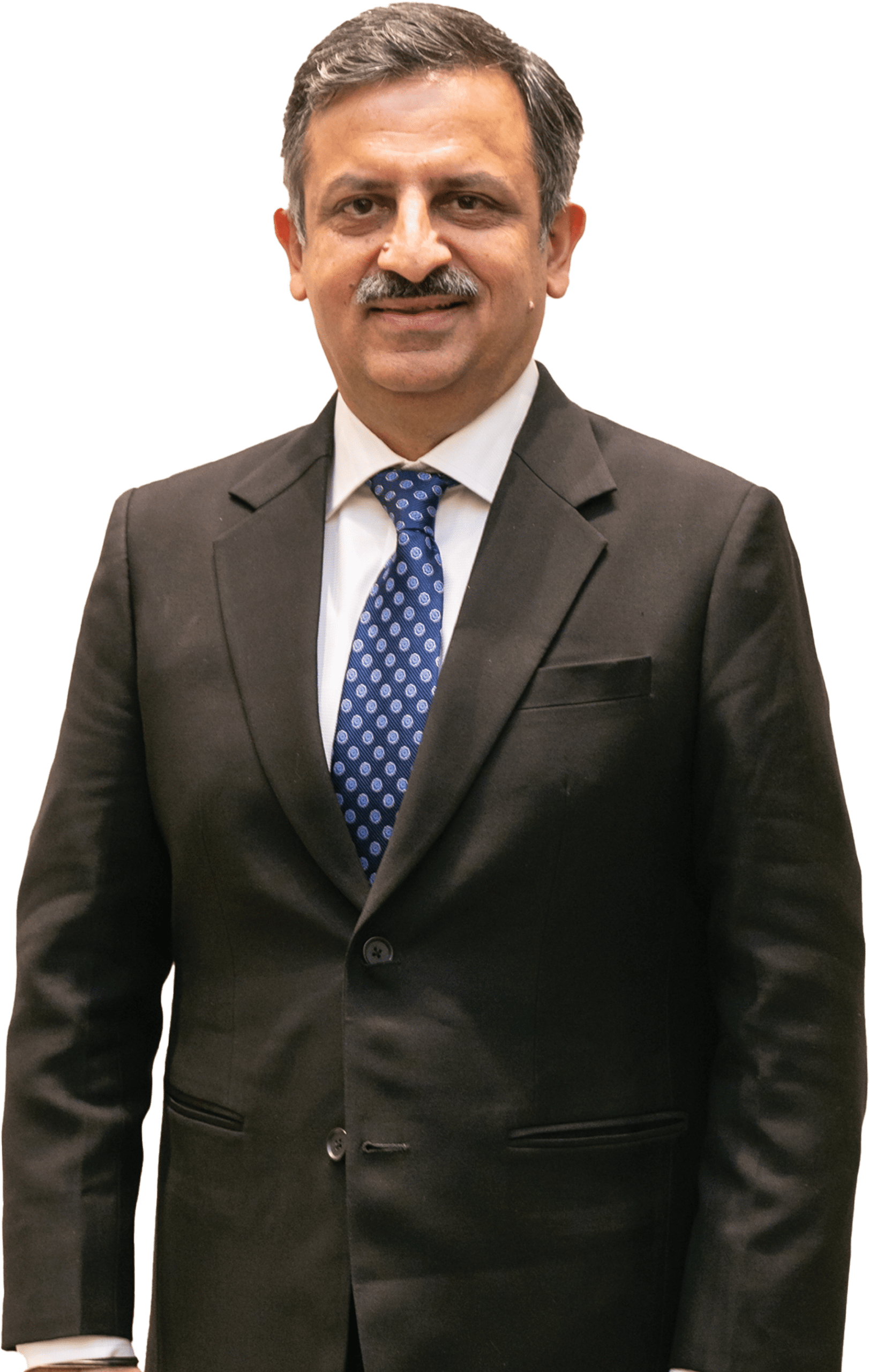
With over three decades of experience at the cutting edge of security, technology, and strategic innovation, Rajan Luthra has played a defining role in shaping Reliance Industries’ integrated approach to managing risk and building resilience. From pioneering mega-scale automation to steering deep tech investments, his journey reflects a rare blend of technical mastery and visionary leadership. In this exclusive interaction, he shares insights into the evolving security landscape, his professional transformation, and what lies ahead for the next frontier of physical and cyber resilience.
Anyone who has interacted with Rajan Luthra would immediately recognize his calm, thoughtful articulation, and the precision with which he frames his words. A perfectionist with a keen eye for detail, Rajan is deeply passionate about his work and thrives on challenges. Though modest in physical stature, he stands tall among his peers for his intellect, integrity, and leadership. His journey is all the more inspiring given the personal challenges he faced after losing his father at the age of 19. Yet, Rajan forged ahead with quiet determination and unwavering purpose.
“Having known him for over 30 years, I can confidently say he is a self-made professional who has continually evolved – both in mindset and capability – to earn a leadership position at the highest levels of one of India’s most influential business institutions,” says GB Singh, Editor-in-Chief of SECURITY TODAY.
Current Role and Achievements
Rajan Luthra heads Special Projects in the Chairman’s Office of Reliance Industries Ltd., India’s largest private-sector enterprise and a Fortune 500 company. He leads a strategic cyber-physical digital security platform and spearheads groundbreaking Joint Operations Centres (JOC) aimed at enhancing enterprise resilience and improving operational efficiencies. For more than 33 years, he has been a champion of large-scale adoption of critical and emerging technologies, including Internet of Things, Artificial Intelligence, biometrics, computer vision, drones, and counter-drone systems.
During his 25-year tenure across Reliance’s diverse verticals Rajan has developed deep expertise in business strategy, enterprise risk management, public policy, and technological innovation. He has played a key role in some of RIL’s strategic investments in frontier-tech startups in Israel and India.
Reliance Industries, originally a textile and polyester company, has transformed into a diversified conglomerate with commanding presence across oil to chemicals, retail, digital services, entertainment, and new energy. Its strategic expansions into petrochemicals, refining, and telecom – along with the revolutionary launch of Jio – have redefined industry standards. Today, Reliance Retail leads the Indian omni-channel retail market, and its forward-looking ventures into financial services, media, and green energy underscore the company’s commitment to innovation and sustainability.
Amidst this dynamic growth, Rajan has consistently understood the complex security challenges that accompany the scale and diversity of these new-age businesses. He has successfully designed and implemented effective risk mitigation frameworks while simultaneously deepening his expertise across emerging domains, demonstrating both adaptability and foresight.
In such a demanding environment, rising from a mid-level security manager in Jamnagar to a position of strategic oversight in the Chairman’s Office represents a remarkable achievement. Reliance is known as an organization that expects precision, performance, and focus on trust – qualities that Rajan has consistently demonstrated throughout his journey.
Several of Reliance Industries’ most transformative security automation initiatives, such as the cutting-edge, end-to-end IP-based security management system deployed at the Jamnagar refinery in the late 1990s, and the $18 million project that secured over 5,000 telecom sites across India for Reliance Communications nearly 25 years ago, were truly ahead of their time in both scale and innovation.
Yet for Rajan Luthra, it is the Reliance Retail rollout that remains closest to his heart. “Being part of the founding team of Reliance Retail in 2006 and leading several programs during its formative, start-up phase was one of the most challenging yet fulfilling experiences of my career,” he reflects.
These ambitious undertakings were not only technological marvels but also organizational milestones, made possible by the unwavering trust and top-down support extended by Mr. Mukesh Dhirubhai Ambani, currently ranked 18th on the Forbes Billionaires List 2025 with a net worth of $92.5 billion, the Chairman of Reliance Industries. As often said, security must flow from the top, and in Reliance’s case, it truly did. Mr. Ambani’s foresight in elevating the security function to a strategic priority enabled leaders like Rajan Luthra to push boundaries and set global benchmarks in integrated security.
Leadership and Recognition
In addition to his corporate leadership, Rajan holds several key honorary roles, reflecting his influence across academia, public policy, and industry forums:
● Honorary Practice Fellow, Institute of Security Science & Technology, Imperial College London
● Distinguished Fellow, Member Trustee and Curator of the Deep Tech Network at the Observer Research Foundation
● Member, Research Council of Central Scientific Instruments Organization, Chandigarh
● Convener – Access Control Panel, Alarms & Electronic Security Systems Committee LITD26, Bureau of Indian Standards
● Member, Innovation Council, Jio Institute
● Advisory Board Member and Steering Committee Chair of the SECURITY TODAY Knowledge Summit
As a Fellow of the C4IR India at the World Economic Forum, he had authored a paper on drone applications in the oil and gas pipeline sector. At the Observer Research Foundation, he co-authored a special report on AI regulations that was prominently featured in a recent edition of a leading national news magazine.
Rajan Luthra brings a rare blend of deep technical expertise in cyber and security automation systems, combined with a strong foundation in asset protection, loss prevention, and enterprise risk management. This multi-faceted capability positions him uniquely at the intersection of technology and operational resilience.
In 2017, Reliance Industries entrusted him with the additional responsibility of evaluating and driving strategic investments in hi-tech start-ups in Israel. His ability to match operational and business needs with global R&D and innovation is another aspect that sets him apart as a next-generation leader.
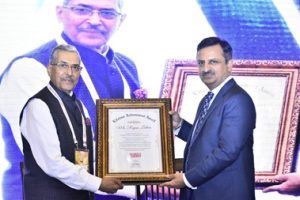 An engineer by profession with an executive MBA in National Security and Counter-Terrorism, Mr. Luthra was honoured with a Lifetime Achievement Award for over 30 years of service and leadership in India’s security industry by SECURITY TODAY in 2023. He also previously served as the National President of the Fire & Security Association of India.
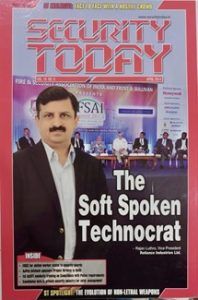
SECURITY TODAY is privileged to reconnect with Mr. Rajan Luthra after more than a decade since our last cover featuring him in April 2014. In the years since, he has grown not just in stature, but as a strategic thought leader whose work and perspectives now commands global attention. His journey is a powerful testament to the impact of vision, perseverance, and continual reinvention in a rapidly evolving world.
Despite the high-pressure role and active travels, we are grateful that Rajan carved out time for this conversation, allowing us to bring you this timely and insightful feature. In this exclusive interview, SECURITY TODAY’s Editor-in-Chief, Mr. GB Singh, engages with Mr. Rajan Luthra to explore the milestones, challenges, and strategic foresight that have shaped his remarkable career.
SECURITY TODAY (ST): From your early beginnings in Information Technology to becoming an entrepreneur in electronic security, what shaped your initial career choices, and how did they influence your future approach to integrated security and resilience at Reliance?
 Rajan Luthra (RL): First, I wish to congratulate SECURITY TODAY once again for achieving the remarkable feat of completing twenty years at the forefront of enterprise risk and resilience management, becoming the torchbearer of curated knowledge for security and risk management professionals in Asia. Thank you also for this coverage after 11 years – it makes one reflect on an eventful journey of three decades with nostalgia.
I firmly believe that facing a challenging work environment early in one’s career builds a strong foundation of work ethics for a lifetime. In my final year of engineering, I enjoyed learning COBOL and found myself drawn to programming. In 1990, I was fortunate to land my first job in the software division of a leading IT company (DCM Data Products). High customer demands and lean teams meant taking on tough assignments in far-flung client locations on topics for which I had no formal training including resolving virus infections on customer MS DOS personal computers configuring Unix mini-computers for financial brokers, teaching Lotus and WordStar to general managers of refineries, and writing dBase code to deliver MIS reports for large manufacturing plants. That experience kick-started my IT journey.
Shortly thereafter, I was fortunate to secure leadership roles in two new ventures for brief stints. One was a financial software product company, ahead of its time, and the second was a first-mover in launching barcode solutions in India. I became exposed to concept selling for uncharted technologies that required engaging with business leaders. Given small teams, the regional head role required building from scratch and overseeing diverse activities.
These experiences were important learning grounds that prepared me well for my entrepreneurial work in electronic security alongside pioneers like you. Our work at bringing the world’s best alarm systems, access control, CCTV, and gate automation solutions to India was exhilarating and converted me from a mechanical engineer to a ‘security engineer’. Adoption of these solutions, that were still in their infancy in India, was limited to large corporations, multinational companies or wealthy individuals. Observing these senior professionals up close, and understanding their perspectives on clarity of thought, problem-focused approaches, and rapid decision-making, proved invaluable in helping me meet the expectations of top management at Reliance Industries when delivering the security management system for the mega refinery at a young age.
ST: Your leadership in establishing the security framework at the Jamnagar Refinery and later formalizing ‘Security Engineering’ as a corporate discipline were unique efforts. What were the biggest challenges you faced, and how did you scale these ideas within a rapidly growing Reliance?
RL: I still feel nostalgic recalling my first visit to the under-construction refinery at Jamnagar in December 1997 when invited to propose an integrated security solution. Seeing the enormity of the mammoth infrastructure being built in the middle of nowhere was truly fascinating. Given my own passion for seeking challenges, my short entrepreneurial journey in security that started, thanks to you in 1993, soon came to an end.
I had been offered to join a Fortune 500 US building automation company to head its security business in India, when a senior Reliance HR leader insisted on my meeting with the legendary Capt. VV Bhat (VVB), President of management services division. I remain grateful to Shri H.S. Pannu, the then Head of Security and a distinguished stalwart in the field, for recognizing the customer-centric and solution-oriented approach in my proposals and subsequently facilitating my onboarding. However, in the meeting with Mr. Bhat I was explained the wide landscape of the new role being envisaged and I decided to join Reliance.
The obvious challenge was adapting to the size, scale, and complexity of the world’s largest grassroots refinery being built at a scorching pace. Fortunately, Shri Mukesh Ambani (MDA) and Mr. Bhat had the foresight to supplement Mr. Pannu’s industrial security focus with best domain experts from Israel, who were world leaders in security even then. Particularly, Mr. Gabi Surujon was an amazing fountainhead of knowledge about cutting-edge technology. In 1999, he and I anchored the team that created the blueprint and executed the world’s first end-to-end industrial-grade Physical Security Information Management (PSIM) using Internet of Things (IoT) technologies – before either of these terms had been coined! The successful inauguration of our world-class Management Control Cockpit (MCC), integrating all emergency services under one roof on September 13, 2000, by our founder Chairman and the entire RIL senior leadership, became a strong foundation for establishing the Security Engineering team. This team took ownership of security automation delivery across the RIL group and subsequently evolved into the Enterprise Security Platform (ESP).
ST: As you mentioned, many of Reliance’s large-scale, groundbreaking security automation projects were approved decades ago, something rarely seen in the corporate world. How important has top leadership support, especially that of Mr. Mukesh Ambani, been in shaping Reliance’s approach to integrated, forward-looking security?
RL: The world recognizes Reliance’s excellence in creating large-scale infrastructure through unmatched project management and execution capabilities. What many don’t appreciate is the in-depth strategic planning undertaken prior to each major initiative. A key aspect is the ability to foresee potential risks and have contingency plans ready for every scenario. This mindset is best understood when one recalls Shri Dhirubhai Ambani’s insistence on extra-strengthening the concrete foundations during the Jamnagar refinery construction. His decision to invest several hundred crore rupees extra to prepare for a much higher Richter scale seemed surprising to most at the time. However, on January 26, 2001, when an earthquake struck less than 100 kilometers away with an intensity of 7.9, all of us present there had to thank the founding Chairman’s foresight in not compromising on safety and security aspects.
 Shri Mukesh Ambani, RIL Chairman, views security not as an expense but as an essential business enabler and critical pillar of enterprise risk management. Overall, Reliance has always been laser-focused on safety, security and quality at our mission critical manufacturing sites.
While significant budgetary allocations are important, the empowerment of corporate security function and enterprise security platform is unmatched. Because of this, not only have we deployed over 500,000 cameras, access control and other IP devices, we have made technology a key enabler for enterprise security risk management.
The same first principles of Reliance management are embedded in the design of any new greenfield security automation project. At the foundation of our security engineering lies a comprehensive 360-degree threat scenario assessment and countermeasures planning from the outset. This approach enables delivery of purpose-built solutions where technology complements manpower in delivering risk reduction and enhancing security effectiveness.
ST: As a founding team member of Reliance Retail and subsequently in the Chairman’s Office, how has your role evolved beyond large-scale technology programs?
RL: Given the length of my career at Reliance, I’ve been fortunate to engage in a diverse array of roles beyond the adoption of electronic security and other emerging technologies. In hindsight, I can categorize them into four segments.
The most exciting has been serving as an intrapreneur – building and scaling new ventures. On the very day I met Shri Mukesh Ambani in person in September 2000, he shared his vision of delivering security services for residential customers of Reliance Communications (RCom). I was transferred to the new telecom company and relocated to Mumbai. Within a few weeks, I developed a business plan that was well-received. After engaging with global partners and extensive detailing, I secured management approval to launch “Security-as-a-Service” as part of our broadband initiative. However, due to changed circumstances in 2005, I decided to return to the parent company.
In 2005, I was among ten individuals handpicked by our chairman to launch Reliance’s foray into consumer retail. I was privileged to work closely with Shri Manoj Modi, leading technology, business process management, and loss prevention domains in his office. In 2009, following the Mumbai terrorist attacks, Reliance wanted to contribute significantly to national security efforts. I was entrusted with launching Reliance Security Solutions and Reliance Aerospace Technologies, onboarding globally renowned leader Dr Vivek Lall as CEO. Once again, we were ahead of our time and decided to focus fully on Reliance Jio, which has become a globally acclaimed societal impact success story.
Each of these new ventures provided amazing learning opportunities while working closely with world-leading companies such as GE, Siemens, and many others. To cite one specific example, while reviewing Jamnagar refinery security jointly with the homeland security team of a US defence prime in 2011, we leveraged the CARVER (Criticality, Accessibility, Recoverability, Vulnerability, Effect, Recognizability) methodology. Using this framework, which originated during World War II and was adopted at scale by US Army Special Forces, led to the discovery of a vulnerable element that hadn’t been on our radar.
Second, I’ve gained valuable insights from various Operating Leadership roles. In 2003, after successfully rolling out IoT-based access, alarm, and video surveillance solutions for telecom sites, I took on the charter of leading the national Security Operations Centre for RCom. This was the first time one SOC was entrusted to ensure security of thousands of unmanned remote sites, delivering clearly demonstrated return on investment.
In 2006, as head of Security and Loss Prevention for Reliance Retail, I was privileged to onboard dozens of senior ex-armed forces veterans as my core team at national and state levels, including personnel from Ordnance Corps and Military Intelligence. This was possibly the largest such endeavour within Indian enterprises. Combined with global professionals who brought best practices, we delivered the industry’s lowest shrink rates, directly contributing to business profitability. This Security and Loss Prevention (SLP) became the benchmark, making it a preferred option for retiring armed forces personnel that traditionally used to give priority to HR or Administration functions.
In 2008, when I joined the Chairman’s Office, it was again a privilege to lead the strategic business transformation of a strong industrial security foundation into a world-class Global Corporate Security (GCS) function. I was allocated resources to hire a US consulting firm to benchmark our processes and workflows to best-in-class global standards. We assembled a stellar Advisory Board of stalwarts from India, Israel, the UK, and the USA.
It still seems surreal that on November 26, 2008, beginning early morning, we conducted a full-day workshop at Jamnagar with a top-notch professional, listing five pages of threat scenarios with their probability and impact ratings. When we reassembled the next morning, having witnessed the dastardly terrorist attacks, our efforts from the previous day proved exhaustive that no new scenarios needed to be added – only some parameters required tweaking. I was also one of the initiators tasked with setting up the Elite Protection Group (EPG) approximately 15 years ago. This team, which started with a few ex-SPG professionals, today protects many top executives at Reliance with active support from India’s law enforcement agencies. One of the most impactful initiatives that gives me immense personal satisfaction is having architected our chairman’s vision of prioritizing employee well-being into a sustainable platform. The Reliance Employee and Family Emergency Response Service (REFERS) offers continuous assistance for any medical, accident, fire, or security emergencies and has delivered emergency support to thousands of our employees and their family members over the past decade. During the COVID pandemic, this served as a critical support helpline for over a million Reliance family members and has proven invaluable for attracting and retaining talent.
Third is the aspect of making strategic investments on behalf of Reliance. This commenced in 2012 with my supporting the GenNext Ventures Fund to make one of its most successful investments in Videonetics Technologies. As a board member, my contributions in helping scale the business and making it among the top five video surveillance companies in Asia were acknowledged by the founder. This experience helped in my being tasked in 2017 to lead RIL’s strategic investments in frontier-tech companies in Israel, the Startup Nation of the world. Being an Investment Committee member of an Israel Innovation Authority-sponsored incubator, where the bulk of the initial risk capital is invested by the Government, offered a different perspective on managing risks. In 2019, I led RIL’s investment in Asteria Aerospace, a leading Indian drone startup whose indigenous technology is supporting national security efforts. Witnessing the problem-solving approach of early-stage founders delivering amazing technology and AI-driven solutions has been rewarding in many ways.
Finally, I have relished being at the forefront of shaping and supporting public-private partnerships and public policy advocacy across multiple industries. Reliance allowed me to take on an honorary role as National President of the Fire and Security Association of India (FSAI) in 2013 for two years. FSAI is today the premier industry body for life safety and security. In the same year, I led a strategic public-private partnership on behalf of Reliance Foundation, establishing India’s first social media lab for Mumbai Police in partnership with NASSCOM.
In 2016, I joined Shri GK Pillai (ex-Home Secretary, Government of India) as co-chair of the Federation of Indian Chambers of Commerce and Industry (FICCI) Homeland Security committee and supported key activities related to policy formulations for India’s nascent drone sector. Recognizing that drones are transformational technology, a dedicated committee on drones was established by FICCI. I was privileged to be nominated as the founding chair of this important committee. In that role, I also led the national taskforce titled the ‘Drone Working Group’ under the aegis of India’s Ministry of Commerce and Industry, tasked with making India the drone hub of the world. Jointly with EY, we delivered the first formal drone and counter-drone market potential assessment. Our efforts played a key role in supporting the Government’s liberalized Drone Rules 2021 and Production Linked Incentive (PLI) Scheme for the drone sector.
More recently, one of the most significant engagements I actively support is as co-curator of the Observer Research Foundation’s (ORF) Deep Tech Network. This global initiative focuses on bringing together entrepreneurs, investors, innovators, and policymakers to enable cross-border investments, meaningful collaboration, and a community that facilitates large-scale deployment of technology for societal good. All these efforts have enabled me to gain a deeper understanding of national and global threat vectors and anticipate risks that require an integrated ‘whole-of-society’ approach to address them.
ST: You’ve clearly moved beyond conventional corporate security and technology delivery roles into the realms of deep tech, strategic innovation, and global community building. For someone at the pinnacle of the corporate risk and resilience domain, what do you see as the next risk frontiers for our society in an era being shaped by AI, space tech, and autonomous systems?
RL: This is a question that everyone involved in risk and resilience should be thinking about seriously. As the COVID-19 pandemic taught us, we’re often caught off guard by risks we haven’t fully anticipated – or prepared for. Building true resilience requires a much more integrated global approach.
One of the most urgent and underestimated threats today is disinformation. The rapid rise of generative AI – especially in producing deepfakes and other synthetic media – combined with automated amplification via botnets and social platforms, is creating a perfect storm. Disinformation campaigns, malign influence operations, and narrative attacks are becoming far more common and effective. In many cases, fabricated content is believed more readily than verified facts. Over the past decade, we’ve seen this undermine elections, stoke social unrest, and threaten geopolitical stability. This evolving threat, often referred to as cyber-influence operations or ‘Cyfluence’, merges cyberattack methods with the broader domain of cognitive warfare.
These tools – once confined to defence and intelligence circles – are now accessible to non-state actors, cybercriminals, and even disgruntled individuals. Enterprises, brands, high-profile personalities, and ordinary citizens are all increasingly vulnerable, and few are equipped to respond effectively. I’ve spent the last three years actively researching and raising awareness about this growing area of risk.
For over 15 years, I’ve also been a strong advocate for the responsible use of drones, given their transformational potential as a dual-use technology. But with their widespread proliferation comes real concern. We are heading toward a future where millions of drones and autonomous vehicles equipped with advanced AI and cameras will operate in public and private spaces. This creates serious implications not just for critical infrastructure and enterprise security, but also for personal privacy. Organizations must start preparing now for the complex risk landscape this technology introduces.
Another inevitable shift is the adoption of smart glasses and augmented reality. With the integration of 5G/6G, AI, and miniaturized sensors, these devices will profoundly change how people experience the world—and how data is captured, shared, and exploited. This convergence will redefine data privacy and security risks for both individuals and corporations.
I would like to end by saying that I feel really privileged and honoured to have had a triple-axis convergence of my professional and personal growth, aligning with the fascinating business growth & diversification of Reliance businesses, which in turn has been fully in sync with the economic growth and transformation of India’s overall stature on the world stage. In some way, it is now a bonus that I also get to support a few startup founders in my orbit with the planning, scale up execution and risk mitigation lessons that Reliance has refined and perfected.
________________________________________
With inputs from Mr. GB Singh, Editor-in-Chief, SECURITY TODAY.