



Mr. Deneshkumar V, General Manager – Sales and Marketing, Gallagher Security – India speaks about the latest in Access Control Systems
ST: What are some of the trends shaping the future of Access Control Systems (ACS) Technology?
DV: The future of ACS technology is being driven by advancements in AI and cloud-based solutions, enabling more intelligent and adaptive security measures. Mobile credentials are  starting to replace traditional access cards, offering greater convenience and security. There’s also a strong focus on cybersecurity, ensuring access control systems are resilient against evolving threats. Integration with IoT and smart building ecosystems is becoming crucial, allowing seamless control across multiple security layers. Additionally, biometric authentication, including facial recognition and fingerprint scanning, is gaining traction for enhanced identity verification. Lastly, sustainability is a key factor, with energy-efficient hardware and eco-friendly solutions being prioritized to reduce the environmental impact of security infrastructure.
ST: How is cybersecurity influencing the future of ACS Technology and the choices customers make?
DV: Cybersecurity is at the core of ACS technology evolution, fundamentally shaping how 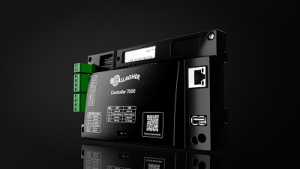 organizations choose security solutions. With increasing cyber threats, customers demand access control systems that provide end-to-end encryption, zero-trust security models, and seamless IT integration.
In a rapidly evolving digital age, following basic cyber hygiene is no longer enough – businesses need a solution that is prepared for tomorrow’s cyber environment, today. With enhanced hardware and cybersecurity baked in from inception, Gallagher’s Controller 7000 (C7000) is up for the challenge. Powerful iMX8 System-on chip and an NXP Edgelock secure element ensure a Trusted Execution Environment (TEE) and guarantees software authenticity on each device, and with a ten times more powerful microprocessor, the C7000 executes access decisions twenty-five times faster, resyncing the cardholder database in half the time.
Organizations are moving towards software-defined, cyber-resilient solutions that ensure not just physical security but also safeguard digital infrastructure against breaches. As a result, cybersecurity is driving the future of ACS, with solutions like the C7000 setting new benchmarks in secure, intelligent access management.
ST: What are the key priorities as identified by End Users when choosing ACS Technology?
DV: End users prioritize several critical factors when selecting ACS technology, with cybersecurity being a top concern. They seek solutions that offer strong encryption, compliance with industry standards like ISO 27001 and NIST, and protection against cyber threats. Scalability is another key priority, as organizations require flexible systems that can grow with their needs. Seamless integration with existing IT infrastructure and third-party security solutions is essential for operational efficiency. Reliability and uptime are crucial, ensuring uninterrupted access and real-time threat detection.
Additionally, there is a growing demand for cloud-based and mobile-enabled solutions, allowing remote management and an enhanced user experience. Gallagher Security’s C7000 addresses these needs by offering industry-leading performance—it can store 1 million offline events and 2 million standard cardholders.
Advancements in AI, modern ACS technology now incorporates predictive threat analysis and adaptive security responses helps in strengthening security and operational efficiency are also expected from end users.
ST: What considerations should End Users have when choosing ACS Technology?
DV: The choice of ACS technology varies significantly based on an organization’s size and complexity of their operations. A small facility may need a straightforward, standalone system, whereas large enterprises require highly scalable solutions that integrate seamlessly with multiple security and business management platforms. Compatibility with third-party integrations is crucial, as organizations often need ACS technology to work alongside existing IT infrastructure, visitor management systems, biometric authentication, and building automation solutions. The system’s ability to support open protocols and APIs ensures flexibility and long-term adaptability. Additionally, industries with strict compliance regulations, such as healthcare and finance, should prioritize solutions that meet global security and data protection standards. The ability to integrate with emerging technologies, including AI-driven analytics and biometric authentication, is becoming increasingly important for future-proofing security investments.
ST: Technology moves fast, how can End Users ensure the solution they choose is fit for the future?
DV: To ensure long-term viability, end users must select ACS solutions that are scalable, adaptable, and continuously updated to meet emerging security challenges. A future-ready system should support open architecture for seamless third-party integrations, allowing organizations to incorporate new technologies like AI-driven analytics, biometrics, and cloud-based management as their needs evolve.
Cybersecurity resilience is equally critical—solutions must adhere to global security standards and offer regular firmware updates, encryption protocols, and zero–trust security models to defend against evolving threats. Additionally, investing in a system with high processing power and storage capacity, like the C7000, ensures the infrastructure can handle increased data loads and new functionalities over time. Organizations should also prioritize vendors that provide strong technical support, ongoing software enhancements, and a clear roadmap for innovation, ensuring their ACS investment remains effective in an ever-changing security landscape.
ST: How is the move to mobile credentials affecting traditional ACS solutions?
DV: The shift to mobile credentials is a significant advancement in ACS technology, offering  enhanced security, convenience, and operational efficiency. Traditional access control systems, which rely on physical cards and key fobs, are now evolving to support smartphones, wearables, and biometric authentication as primary access methods.
Mobile credentials provide encrypted communication, multi-factor authentication (MFA), and remote management capabilities, reducing risks associated with lost, stolen, or cloned cards. Additionally, they align with the growing demand for cloud-based access control and OSDP integrations with identity management and visitor management systems. This transition also supports sustainability efforts by reducing plastic waste from physical cards and the complexities of lost or stolen cards.
While organizations must ensure compatibility with existing infrastructure, the move to mobile credentials is a natural progression in modern security, enabling contactless, flexible, and future-ready access solutions for businesses of all sizes.
ST: What are the external influences affecting the decision making of End Users when adopting ACS?
DV: ACS are essential for ensuring security, operational efficiency, and regulatory compliance. They restrict unauthorized entry, prevent theft and vandalism, and enhance occupant safety. Factors influencing the decision to adopt ACS include cybersecurity threats, technological trends like cloud-based access control, market and industry influences, financial considerations, user preferences, and external environmental factors such as post-pandemic work trends and geopolitical risks. Together, these elements drive end-users to implement robust and adaptable ACS solutions in modern buildings.