

In an effort to streamline airport security and enhance the passenger experience, UK airports are experimenting with dynamic security lanes powered by artificial intelligence (AI) and cutting-edge CT scanners.
The technology aims to reduce wait times and minimize the often frustrating rituals associated with airport security, such as unpacking liquids and laptops. Southampton Airport recently led the way in testing this innovative approach, leaving passengers pleasantly surprised by quicker, less intrusive procedures.
These dynamic lanes, part of the ongoing Project DARTMOUTH, are now being tested at key UK airports, including Heathrow, Gatwick, and Manchester. With the government setting a deadline for full implementation by 2025, UK travelers can expect to experience a smoother journey through security, though some hurdles remain as the technology is integrated into busy terminals.
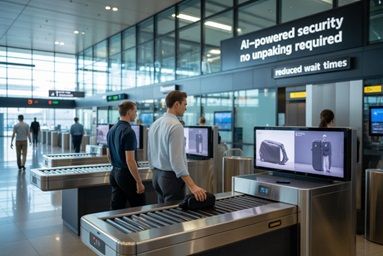
Dynamic security lanes use AI-powered CT scanners that provide detailed, 3D images of bags, allowing security personnel to analyze items more thoroughly and efficiently. Unlike traditional X-ray machines, which often show shadows and require additional checks for items like laptops and liquids, the CT scanners offer a clearer picture of each bag’s contents. This allows security staff to focus on flagged items while passengers continue through the checkpoint without needing to remove their laptops or toiletries.
The new AI systems can also automatically detect potential threats based on an extensive database of known items and patterns, providing a faster and more accurate assessment. This technology has the potential to reduce both wait times and human error, leading to a less stressful experience for travelers.
At Gatwick, another innovation is being tested alongside the AI-powered scanners: a “Call Forward” system that dynamically manages the flow of passengers through security. The system monitors real-time passenger data and adjusts the flow by instructing travelers when to approach the security checkpoint, reducing congestion during peak times.
Gatwick officials aim to process 95% of passengers in under five minutes, a significant improvement over traditional methods, which often result in long, frustrating lines. While early tests are promising, there are still challenges to overcome in implementing these systems at airports across the UK, including delays in building and installing the necessary infrastructure.
While the technology behind dynamic security lanes is promising, airports face several obstacles in rolling it out across the UK. Heathrow and Manchester, two of the busiest airports in the country, have had to invest millions in rebuilding their security areas to accommodate the larger CT scanners. Due to the complexity of the installation process, the government has extended the rollout deadline to 2025 to give airports more time to complete the necessary upgrades.
Currently, passengers at airports where these systems are being tested may still encounter temporary barriers and awkward security layouts. As terminals undergo construction, travelers may experience some inconvenience. However, the long-term benefits of these changes are expected to significantly improve airport operations, providing passengers with a more efficient and less stressful experience.
The most immediate benefit of AI-powered security lanes is the reduction in wait times. Passengers no longer need to remove laptops or liquids from their bags, which will make the process faster and less invasive. The use of AI also allows for more precise threat detection, reducing the chances of false alarms and unnecessary delays.
For business travelers, this means faster clearance through security, enabling more time to focus on their meetings and work commitments. Tourists, on the other hand, can enjoy a smoother start to their holiday, with less time spent in long lines and more time exploring their destinations.
Beyond the direct impact on passengers, the new system is expected to reduce operational costs for airports by streamlining the security process and reducing the need for manual checks. This could lead to faster processing times and a more comfortable experience for everyone passing through airport security.