

An independent government watchdog found major issues in the way the U.S. Navy conducts fire safety prevention and contractor oversight for ships during maintenance periods.
Staffing shortages and ineffective tools for ensuring contractors comply with fire safety standards are the biggest hurdles for future fire risk aboard Navy ships, the Government Accountability Office warned in a Dec. 17 report.
Without addressing these issues, the service “risks creating an environment where unaccounted-for risks can accumulate in a manner that creates hazardous situations,” the report stated.
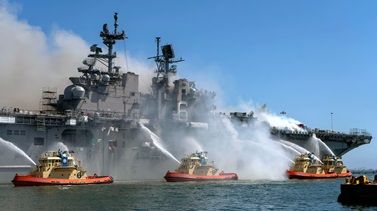
Between May 2008 and July 2020, there were 15 major fire incidents aboard Navy ships, thirteen of which occurred on those undergoing maintenance. One of the worst fires occurred July 12, 2020, aboard the USS Bonhomme Richard, when 11 of the amphibious assault ship’s 14 decks caught fire. As a result of the damage, the vessel was retired 17 years earlier than planned and the Defense Department incurred billions of dollars in damage.
After the Bonhomme Richard fire, the Navy implemented changes that helped protect the service from future fires aboard vessels during maintenance, according to the report. The Navy rewrote its 8010 Manual that addresses fire prevention during ship maintenance. The manual, which includes training requirements for fire safety officers and information on fire protection systems, was updated to include reformed fire safety requirements.
The service also revised NAVSEA Standard Items, a set of requirements inserted into ship maintenance contracts that outline safety standards. The Navy began establishing 11 Commander, Naval Surface Groups to lead emergency management efforts during safety incidents, an effort that was previously fractured across multiple Navy organizations. The groups will develop emergency response plans and help ship crews understand fire regulations, among other jobs.