


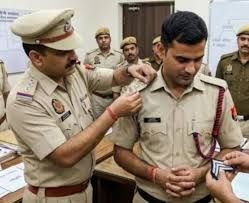
The Delhi Police has initiated a comprehensive review of its promotion policy and executive cadre structure in a bid to address long-standing stagnation in promotions, correct structural imbalances, and create a more streamlined hierarchy for its personnel, according to an internal proposal.
As part of the proposed restructuring, Delhi Police has also suggested the introduction of two new intermediary ranks Senior Sub-Inspector (Sr SI) and Senior Inspector to ease bottlenecks in promotion and strengthen supervision within the force.
The move comes amid growing concerns over limited promotional avenues for personnel from the rank of constable to inspector, with the force acknowledging that the existing structure has not kept pace with the expanding demands of modern policing, including cybercrime investigation, women’s safety, traffic management, and economic offences.
Officers said the proposed restructuring aims to create a balanced pyramidal cadre, improve career progression opportunities, and align the force’s promotion framework with present-day operational requirements while ensuring compliance with central government guidelines.
According to the proposal, the rank of Sub-Inspector (Executive), which is currently a direct-entry post, would become a promotional rank. A new non-gazetted rank of Sr SI would be created between the ranks of Sub-Inspector and Inspector. Senior SI’s would be tasked with leading investigations into serious and sensitive cases, heading investigation teams independently, and serving as sub-sector in-charges during law and order deployments.
The proposal states that the creation of the Senior SI rank would be a functional upgradation and would not entail immediate financial benefits, with personnel receiving monetary upgradation through the first Modified Assured Career Progression (MACP) scheme after 10 years of cumulative service in Level 6 of the pay matrix.
The restructuring proposal also recommends the creation of a gazetted rank of Senior Inspector between Inspector and Assistant Commissioner of Police (ACP). The rank is envisaged as a key supervisory position and a feeder cadre for promotions to ACP.
Senior Inspectors would be eligible to serve as Station House Officers (SHOs), supervise investigations into murder, heinous crimes and cybercrime cases, and independently lead operational teams in specialised units such as Security, Crime and Special Branch. The proposal describes the rank as an operational bridge between ACP’s and lower ranks within the executive cadre.
Officers said the move is aimed at creating additional promotional avenues while ensuring stronger supervision and better distribution of responsibilities across ranks. The proposed Senior Inspector rank would be placed in Level 8 of the pay matrix, although the proposal notes that many officers reaching the post may have already received financial upgradation under the second MACP scheme.
Another key proposal aspect under consideration is the merger of the separate male and female executive cadres from the ranks of constable to sub-inspector into a single unified cadre.
The proposal links the restructuring to emerging policing requirements, particularly in cybercrime investigations. The proposal has argued that the increasing volume and complexity of cybercrime cases require a larger pool of officers at supervisory and investigative ranks.
“At present, many cybercrime investigations are being handled by head constables, and the proposal notes that there is a need for a greater number of inspectors and other senior investigating officers to handle such cases and effectively present evidence and investigations before courts,” read the proposal.
As per the proposal, while 33 per cent reservation for women in direct recruitment at the levels of constable and SI has been in place since 2016, the sanctioned strength of male and female cadres continues to be maintained separately. Over time, this has led to an imbalance, with the number of women personnel exceeding sanctioned posts in the female cadre and corresponding vacancies remaining in the male cadre.
According to officers, maintaining separate cadres has resulted in unequal promotional opportunities. “The proposal cites instances where most male constables recruited in 2006 have already been promoted to the rank of head constable, while several women constables from the 2000 batch are yet to receive their first promotion because of a shortage of vacancies in the female cadre. Similar disparities exist at the sub-inspector level…” the proposal states.
Expressing hope that the proposal will result in providing experienced officers their rightful promotions, an officer said, “People who joined in 1995 or 1997 are still working on a look-after Inspector charge rank since 2014. Most of us will retire in 2027 so at least we should live with a rank for 5-6 months, the least we deserve.” The proposal has been shared by Robin Hibu, Special Commissioner of Police, Human Resource Division with David Lalrinsanga, Special CP Ops for views and comments.