

The Chinese police have begun upgrading the country’s outdated CCTV infrastructure with powerful surveillance systems featuring cutting-edge AI technology. This is reported by the Financial Times, which reviewed more than a dozen procurement documents and spoke to industry experts.
Analysis has shown that local authorities across China are rolling out new AI surveillance systems as Beijing encourages the police to move towards so-called ‘predictive policing’. The upgrade is the largest in the system’s history, which was established 10 years ago to monitor the population, reduce crime and suppress dissent.
From the outset, the CCTV system relied on facial recognition, number plate scanning and standard computer vision systems; however, it was built primarily to identify specific individuals, operated on outdated equipment and transmitted video to centralised data centres for processing. The update will eliminate the need for manual analysis of recordings and allow for a broader impact on people who are not on so-called ‘watchlists’.
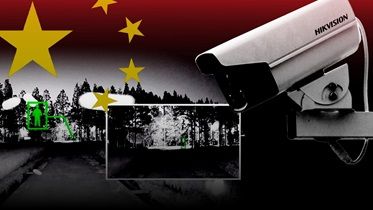
Over the past two years, local companies, notably Hikvision and Huawei, have released a range of products featuring computer vision and built-in large language models. They run on powerful chips that allow data to be processed directly on the devices whilst recording video. The systems are trained to detect and flag behavioural anomalies, such as crowds, and allow video to be searched using text queries, such as “woman in a red hat”.
According to the Financial Times, a procurement document from Yaodu County in Sichuan Province refers to the installation of around 175 high-resolution cameras with an intelligent video analysis system. A tender by the Datong City Police mentions Hikvision cameras capable of identifying a person’s gender, posture and clothing.
Initially, the systems are planned to be deployed in densely populated urban areas, as well as zones surrounding military and government facilities. Some departments are not replacing the cameras entirely, but are retaining existing equipment, replacing intermediate servers with ‘AI PCs’ that process video locally and help reduce cloud computing costs.
The upgrade follows a 2024 directive issued by Public Security Minister Wang Xiaohong in the wake of a series of violent incidents that experts link to a mental health crisis exacerbated by pandemic lockdowns and a weak economy.
At the same time, the cost of the upgrade is significantly lower compared to the initial roll-out of the system, which experts estimated at 300 billion yuan (approximately $42 billion). Judging by the 12 tenders analysed by the publication, the current budget ranges from 1 to 10 million yuan (from $140,000 to $1.4 million) per district. Sources familiar with Hikvision’s business expect that investment could rise rapidly.