

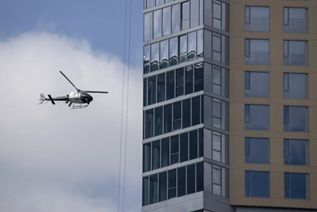
The LAPD’s black-and-white helicopters have long been a fixture of local skies, allowing the police to track suspects and patrol the city from above. Now, the air traffic is growing more crowded with the expansion of the department’s drone fleet. The Los Angeles Police Department has increasingly come to rely on small, unmanned aerial vehicles since launching a “drone as a first responder” pilot program in July.
In a report presented to the Police Commission, LAPD officials said drones were deployed more than 3,000 times last year, mostly in response to emergency calls or officer requests for assistance. In recent months, the devices have been deployed to incidents including home break-ins and calls about armed suspects. An online dashboard of LAPD flight activity showed they were used at least 39 times in one day earlier this month.
The LAPD drones are propelled by four sets of rotors. Each drone is about 3 feet wide and equipped with cameras and infrared night vision. Department officials say the drones take off from launchpads that are strategically placed around the city. Once airborne, they can cover two miles in roughly two minutes, allowing police to more quickly get eyes on crime scenes and determine the level of appropriate response.
The first LAPD helicopters took flight in 1956 to help monitor traffic along the city’s growing highway system. Drones have been part of the department’s arsenal for just over a decade, but until recently their use was restricted to a narrow set of incidents, most involving barricaded suspects or bomb threats.
Officials have made it clear that drones are meant to complement — not replace — an aging fleet of 17 helicopters, among the largest in the world for a municipal police department. At least two choppers are kept up in the air for around 20 hours every day. In recent years, the helicopters have drawn more and more complaints about high operating costs and the potential health impacts from noise pollution.
Some members of communities where they most often hover have come to consider them an unwelcome intrusion and a reminder of the LAPD’s overbearing presence. Critics worry that the quieter, nimbler drones will be used to surveil the public with little oversight.
The news site the Intercept reported that the department deployed drones to monitor crowds during the recent “No Kings” protests.
Caren Kaplan, a professor emeritus at UC Davis, who has written about police “weaponizing airspace” with the use of helicopters, said she is equally wary of the newer generation of drones that combine with AI technology. “At least a police helicopter is identifiable,” she said. “Small drones can be really pernicious.”
Talk of expanding the role of drones has been ongoing for years but ramped up in 2025 after a public outcry over a series of high-profile burglaries on the city’s Westside. At a presentation in front of the Police Commission this year, department officials said they plan on growing the drone fleet from nine to 24 devices, which launch from 17 docks spread across five police divisions.