


Curated by SECURITY TODAY, the Indian subcontinent’s most trusted voice in security for over two decades, with 250+ editions published and a dedicated readership of thousands of security professionals, the SECURITY TODAY Knowledge Summit (STKS) has firmly established itself as the region’s premier platform for knowledge sharing, networking, and professional growth in the security industry. Renowned for its quality, cutting-edge topics and high-caliber speakers, STKS convenes thought leaders, practitioners, and experts in security, risk management, and resilience to shape the conversations that matter. Recognized for its quality and impact, it is perhaps the only event of its kind in the region that senior security professionals eagerly anticipate each year, whether to expand their expertise or validate their strategies.
Held on 10th September 2025 at the prestigious Jio World Convention Centre in Mumbai, a world-class venue with state-of-the-art facilities, this year’s STKS featured an exceptional lineup of speakers, arguably the strongest in recent years. They shared insights on cutting-edge, highly relevant topics shaping the role of professional security practitioners. The 18th edition of the event was themed “Rethinking Resilience in a Risk-Laden World,” a fitting focus given the uncertainty and unpredictability of today’s environment. While many challenges cannot be prevented, businesses can take proactive steps to mitigate their impact and continue operating effectively.
STKS 2025 brought together an exclusive gathering of the nation’s foremost Chief Security Officers (CSOs), Chief Information Security Officers (CISOs), Chief Risk Officers (CROs) and senior enterprise leaders to deliberate on the rapidly evolving security landscape. Against the backdrop of geopolitical volatility, disruptive technologies, and the convergence of cyber and physical risks, this year’s summit underscored the urgent need for resilience, adaptability, and indigenous innovation in enterprise security. As in previous years, the focus was on ‘quality’.
Structured around the central theme of building operational resilience, STKS 2025 featured keynote insights, fireside chats, and high-powered panel discussions addressing the most pressing challenges faced by security leaders today. Sessions delved into vulnerabilities ranging from undersea cables and energy grids to AI-powered financial frauds, while also highlighting the growing threat of disinformation campaigns and false narratives that can destabilize organizations and societies. Emphasizing intelligence-driven vigilance and board-level cyber resilience, the discussions offered actionable strategies for anticipating, withstanding, and recovering from both digital and physical disruptions in an increasingly complex risk landscape.
Highlights of the summit included a series of thought-provoking panel discussions and a fireside chat that captured India’s journey from technological dependence to indigenous innovation and global competitiveness. Equally compelling were deliberations on India’s evolving role in a shifting global order, where strategic realignments increasingly influence enterprise risk frameworks. A standout moment was the participation of senior officers from the Indian Navy, marking their first appearance at STKS, who spoke in depth about the escalating risks to critical infrastructure along India’s vast coastline. With many of these assets owned and managed by the private sector, the discussion underscored the urgent need for close collaboration between government and industry to safeguard ports, energy facilities, and maritime networks. The session also highlighted the importance of shared intelligence, coordinated response mechanisms, and integrated risk assessment frameworks to protect these vital national lifelines.
Following the singing of the National Anthem by everyone present and the ‘Lighting of the Lamp’ ceremony by the dignitaries, Group Editor and Convenor of STKS Mr. Gurbir (GB) Singh welcomed everyone to the 2025 edition of STKS, In his address he said
Mr. GB Singh, Group Editor of SECURITY TODAY, welcomed participants from India and overseas to the SECURITY TODAY Knowledge Summit 2025, highlighting over 21 years of publication and the magazine’s role as the trusted voice of the Indian security industry. He emphasized the summit as a hub of dialogue and collaboration, acknowledging the contributions of the STKS Steering Committee, led by Mr. Rajan Luthra and including Mr. Bruce McIndoe, Dr. Firoze Zia Hussain, Mr. Ankush Maria, Mr. Amit Narayan, Adv. Puneet Bhasin, and Ms. Aman Singh, for curating a robust and timely agenda.
He also extended gratitude to the event’s partners – Title Partner CP PLUS, Platinum Partner Videonetics Technology, Gold Partner Godrej, and Silver Partner Northland Controls, along with supporting industry partners, ASIS International’s All India Chapters, and Pune Security Professionals. Mr. Singh encouraged attendees to actively engage with speakers, participate in discussions, and forge connections that will drive innovation, resilience, and progress across the security industry.
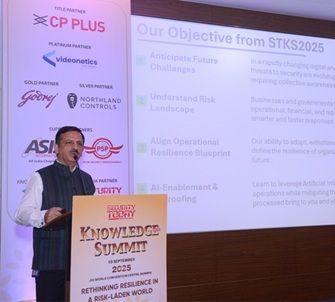
Following this was the Special Address by Mr. Rajan Luthra (Chairman’s Office Head Special Projects, Reliance Industries Limited and the Chair of STKS Steering Committee). In his opening remarks, Mr. Luthra outlined four key objectives for the day: anticipating future challenges, understanding the evolving risk landscape, developing an operational resilience blueprint, and leveraging as well as securing against AI. He highlighted the importance of hearing diverse perspectives to enrich collective understanding and emphasised that operational resilience must become a practical part of day-to-day work. He said the agenda spans eight focus areas, including geopolitical developments, the role of resilient banks in national security, cyber resilience, maritime and energy security, self-reliance in critical technologies, disinformation threats, and intelligence sharing. He also referenced the EU’s Digital Operational Resilience Act, encouraging the community to shape its own “physical-digital operational resilience action plan.” Concluding his address, he added “as professionals, our real value lies not just in learning new things but in being ‘catalysts for change’, moving beyond merely identifying problems to actively shaping solutions. As challenges continue to grow in scale and complexity, and as enterprise security and national security increasingly intersect, each of us has a unique opportunity to drive meaningful impact and make a real difference”.
The sessions opened with a keynote address by Lt. General Asit Mistry, PVSM, AVSM, SM, VSM (Retd.) (former GoC Delhi and Director of the School of Internal Security, Defence & Strategic Studies at Rashtriya Raksha University). Speaking on the theme “India at the Center of a Multipolar World – Geopolitics and Enterprise Security,” he set the tone for the summit with a sweeping overview of the shifting global order.
As global power realignments accelerate and multipolarity becomes the defining feature of international relations, India is emerging as a pivotal voice, balancing strategic partnerships, advancing economic diplomacy, and reinforcing its security posture. Lt. Gen. Mistry underscored how these choices not only shape regional stability and global governance but also carry direct consequences for enterprises that must navigate an increasingly complex web of cross-border risks. He highlighted challenges such as supply chain dependencies, regulatory uncertainties, cyber vulnerabilities, and geopolitical flashpoints in the Indo-Pacific.
 In this evolving multipolar world, he said that India’s role is increasingly pivotal. As the fastest-growing major economy, it leverages its unique geography, shielded by the Himalayas in the north and commanding influence across the Indian Ocean through its long coastline and vital SLOCs. Rooted in its tradition of strategic autonomy yet driven by the imperative of Atmanirbharata (self-reliance) in defense, technology, and industry, India is steadily advancing toward a Saksham (capable), Surakshit (secure), and Viksit (developed) Bharat. With its economic momentum, geographic centrality, and balanced diplomacy, India stands as both a stabilizing force and an agenda-setter, shaping regional security and influencing enterprise strategies in a complex global risk environment.
The keynote drew attention to how India’s evolving role on the world stage is reshaping the very contours of enterprise security strategies and resilience planning, making it imperative for business leaders to integrate geopolitical awareness into their risk frameworks.
 Mr. Dinesh Kumar Khara (former Chairman of the State Bank of India), delivered a compelling keynote on “Resilient Banks Build Resilient Nations, and Global Trust in India.” He emphasized that fraud in banking has evolved far beyond simple monetary theft—it now strikes at the very foundation of trust, with profound implications for both institutions and the economy. Trust erosion can trigger deposit withdrawals, weaken investor confidence, and create systemic instability. Reputational damage affects customer acquisition, retention, and market positioning, while the broader economic impact discourages financial inclusion, drives people toward informal channels, and slows growth by weakening formal financial systems.
Modern fraud has grown increasingly sophisticated, encompassing advanced technological attacks, cyber intrusions, phishing schemes, identity theft, insider collusion, and AI-powered deceptive practices. Addressing these challenges requires a strategic, holistic response: integrating advanced technologies, ensuring rigorous regulatory compliance, educating and empowering customers, and implementing trust-focused recovery processes that prevent loss while reinforcing confidence in the financial ecosystem.
Mr. Khara highlighted that in this context, trust becomes India’s ultimate competitive advantage. By building resilient, technology-driven, and trustworthy banks, the country can strengthen both national financial stability and global confidence in its economic and banking systems.
 The next session of the day focused on the critical topic of Cyber Resilience, under the theme “From Breach to Recovery.” The keynote was delivered by Mr. Brijesh Singh, IPS (Additional Director General of Police and Principal Secretary to the Hon. Chief Minister of Maharashtra), who set the stage for an in-depth exploration of evolving cyber threats.
The subsequent panel discussion was moderated by Adv. Puneet Bhasin (Founder of Cyberjure Legal Consulting), with panelists including Mr. Brijesh Singh, Mr. Vishal Jain (Partner at Deloitte India), and Lt. Col. Nishant Singh (Retd.) (Chief Operating Officer at GRAMAX, GMR Group).
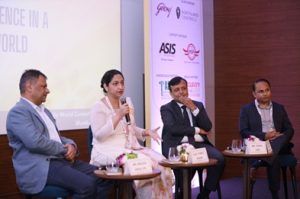 As cybercrime grows in both scale and sophistication, the panel highlighted that organizations must move beyond mere compliance to embrace true cyber resilience. Discussions examined how enterprises can anticipate, withstand, and recover from attacks by balancing technology, processes, people, and legal recourse under evolving cyber laws. Emphasis was placed on safeguarding trust, business continuity, and organizational value in today’s increasingly hostile digital landscape.
Setting the context for the next session, titled “Invisible but Vulnerable: Safeguarding India’s Maritime, Digital, and Energy Lifelines”, Mr. Amit Narayan (Partner, India and South Asia at Control Risks). This panel brought together senior maritime and technology experts, including Vice Admiral Madanjit Singh (Retd.), (former Flag Officer Commanding-in-Chief, Western Naval Command), Vice Admiral Abhay Raghunath Karve (Retd.), (former Flag Officer Commanding-in-Chief, Southern Naval Command), Rear Admiral Rahul Shankar, (Flag Officer Offshore Defense Advisory Group and Advisor Offshore Security and Defense to the Government of India), Mr. M.A. Johar (President – Project Business, CP PLUS), and Mr. Bhardwaj Naik (Sr. Vice-President & CRO, Videonetics Technologies).
 Amit Narayan commenced by drawing the attention of the audience to the September 6th, 2025 incident, where multiple undersea fibre-optic cables in the Red Sea were reportedly cut, disrupting about 70% of Internet traffic between Europe and Asia and slowing communications with significant business impact. Such incidents highlight the vulnerability of the critical arteries of global commerce, communications, and energy to sabotage, hacking, or other threat actor activity.
At STKS 2025, he said, discussions have focused on identifying, mitigating, and managing these emerging threats before they escalate. Geopolitical, economic, and social crises—often amplified or even manufactured online—create new pathways for radicalization and influence operations, targeting high-profile strategic national and corporate assets. Critical maritime, digital, and energy infrastructure are increasingly at risk, with attacks likely to grow in frequency, impact, and audacity, outpacing even the most advanced security programs.
He stated that the panel sought to explore two key questions: how nations and corporations can understand and prepare for risks to critical infrastructure, and how policymakers, defence strategists, intelligence experts, and security technologists can collaborate to build pre-emptive, resilient systems to manage these threats effectively.
The discussion highlighted how global digital and energy lifelines rely heavily on maritime infrastructure—both above and below water—which faces a growing spectrum of threats, from espionage and autonomous underwater incursions to deliberate sabotage. Panelists emphasized the critical need to secure undersea cables, enhance surveillance around landing stations, and leverage unmanned underwater vehicles (UUVs) for monitoring and defense. The session underscored the importance of technological innovation, robust policy frameworks, and strategic collaboration to protect these vital yet often invisible arteries that underpin global connectivity and commerce.
The next session was titled “Fortifying Fuel: Defending India’s Critical Energy Infrastructure from Hybrid Threats”. This was chaired and moderated by Mr. Rajan Luthra, Chairman’s Office, Head – Special Projects at Reliance Industries Limited, this session brought together experts including Mr. Shailendra Singh (Managing Director, PwC India), Maj. Nirmith Thakur (Retd.) (VP, Intelligence Security and Crisis Management, BP), Lt. Cdr. (Dr.) Husein Sakerwala (Retd.) (AVP, Adani Electricity, Mumbai Ltd.), and Mr. Mahesh Chitte (GM – Sales Project, CP PLUS).
 As geopolitical tensions rise and the energy sector becomes increasingly digitized, critical energy infrastructure faces a spectrum of hybrid threats—ranging from cyberattacks and drone intrusions to insider sabotage. The panel discussed integrated approaches to safeguarding pipelines, refineries, offshore rigs, LNG terminals, and other key energy assets. Experts emphasized the role of converged security operations, advanced surveillance technologies, and real-time threat intelligence in enhancing resilience and ensuring the protection of India’s national energy security amid an increasingly volatile, multi-domain threat environment.
What followed was a Fireside Chat: “From Dependence to Dominance – The Indigenous Edge”
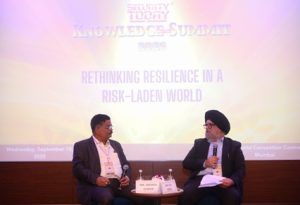 In this engaging fireside chat, Mr. Anurag Kumar (Chairman & Managing Director of Electronics Corporation of India Limited), joined Mr. GB Singh (Editor-in-Chief of SECURITY TODAY), to discuss India’s journey from technological dependence to self-reliance. The conversation explored how indigenous innovation is driving national security, protecting critical infrastructure, and enhancing strategic autonomy. Drawing insights from defence, space, and enterprise security sectors, the dialogue highlighted the opportunities, challenges, and enabling factors that can accelerate India’s emergence as a global leader in security technology and innovation, truly defining the nation’s ‘Indigenous Edge’.
The next session comprised of a Keynote Address by Dr. Tehilla Shwartz Altshuler, (Senior Fellow at the Israel Democracy Institute) followed by a Panel Discussion titled, “The Age of Disinformation:Battling Weaponised Lies in an Ultra-Connected Digital World”
Dr. Tehilla Shwartz Altshuler explained the critical distinctions between misinformation, disinformation, and malinformation.
She said that ‘Misinformation’ refers to unintentional mistakes, such as inaccurate photo captions, wrong dates, faulty statistics, translation errors, or instances where satire is misunderstood as fact. Whereas, ‘Disinformation’ involves deliberately fabricated or manipulated content—whether audio, visual, or textual—including intentionally created conspiracy theories or rumors designed to mislead, and ‘Malinformation’ is the intentional release or alteration of private information for personal or corporate gain rather than public interest, such as revenge pornography or the deliberate modification of genuine content, dates, or timestamps.
Understanding these distinctions, she noted, is crucial for governments, media, and enterprises to develop effective detection, countermeasures, and resilience strategies against the spectrum of information threats today.
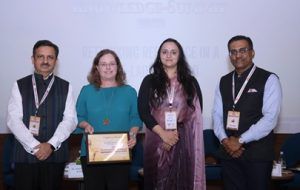 The session was chaired and moderated by Mr. Rajan Luthra, Chairman’s Office, Head – Special Projects, Reliance Industries Limited. Panelists included Ms. Apeksha Kaushik, Principal Analyst at Gartner, and Dr. Sameer Patil, Director at the Centre for Security, Strategy and Technology, Observer Research Foundation, and Dr. Tehilla Shwartz Altshuler. Discussions emphasized practical mitigation strategies, highlighting specific actions that CSOs and CISOs should plan, implement, and rehearse to safeguard their organizations and stakeholders in an era of increasingly sophisticated influence operations.
In today’s hyper-connected digital world, disinformation has emerged as a powerful weapon, with state and non-state actors exploiting digital platforms, AI, and deepfakes to manipulate narratives, polarize societies, and erode trust. This session explored how such campaigns are orchestrated, their impact on national security, public perception, and enterprise risk, and the measures governments, media, and organizations must adopt to detect, counter, and build resilience against these growing threats.
The last session of the day was a Panel Discussion – “Shared Threats, Shared Solutions – Internal Security Lessons for Businesses”
This concluding session of STKS 2025 focused on the growing intersection between national and corporate security, emphasizing that as India’s internal security challenges evolve amid geopolitical shifts and rapid economic expansion, businesses can no longer operate in isolation. The discussion underscored the importance of collaboration between the state and private sector in building a secure and resilient national ecosystem.
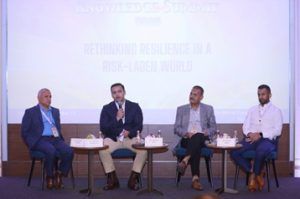 Moderated by Dr. Firoze Zia Hussain, CSO of Delhivery, the panel featured Mr. Siddharth Kaushal, SRM professional and former IPS officer; Col. Hasmukh Patel, SM (Retd.), Risk Intelligence Consultant; and Mr. Kaushal Bheda, Director at Pelorus Technologies. Together, they explored how enterprises can act as trusted partners to the government, serving as the “eyes and ears” of the nation through intelligence-driven vigilance. The panel discussed actionable frameworks for cooperation, data sharing, and situational awareness that could help businesses strengthen both physical and cyber resilience, ensuring that India’s growth story remains secure, stable, and sustainable.
Learnings and Key Takeaways
Beyond the sessions, STKS 2025 reaffirmed its position as the most prestigious knowledge exchange platform for security leaders in India. The summit encouraged invaluable peer-to-peer networking, stimulated collaboration between industry and government stakeholders, and reinforced SECURITY TODAY’s commitment to shaping thought leadership in national and enterprise security.
By the close of the day, one message resonated clearly: in an era where crises are constant and threats transcend borders, building resilience is not merely about defense, but about the ability to bounce back stronger, smarter, and more secure, ensuring enterprises are ready for the challenges of tomorrow.
STKS 2025 concluded with a clear consensus among leaders: the future of enterprise security lies not only in adopting advanced technologies but in embedding resilience, trust, and agility at the core of every system. Across discussions, three strategic imperatives stood out:
AI-Enabled and AI-Proofed Security
Security leaders recognized that artificial intelligence is both an enabler and an adversary. Enterprises must harness AI for predictive defense while simultaneously hardening systems against AI-driven attacks, manipulations, and fraud. The focus is shifting from adoption to adversary-proofing.
Indigenous Innovation as Strategic Autonomy
India’s transition from technological dependence to self-reliance was celebrated as a national imperative. By leveraging indigenous solutions in defense, critical infrastructure, and digital security, enterprises can reduce vulnerabilities to global supply chain shocks while boosting competitiveness and sovereignty.
Resilience Beyond Compliance
Compliance driven security frameworks are no longer sufficient. Enterprises must embed resilience by design, integrating processes, people, technology, and legal preparedness, so they can withstand and recover from complex, multi-vector attacks.
The Summit ended with a Vote of Thanks being delivered by Ms. Aman Singh, the Associate Editor of SECURITY TODAY, where she thanked all the Speakers, Partners, Steering Committee members, core team members, and others who worked tirelessly behind the scene to put together, yet another, high quality event this year.
—————————
The conversations at STKS 2025 were too rich to be contained within a single report. SECURITY TODAY will feature in-depth analyses of each session in the coming editions, bringing readers the full spectrum of ideas and perspectives shared by the summit’s distinguished speakers.