


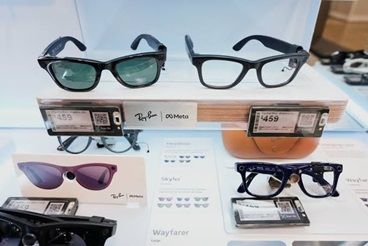
US Immigration and Customs Enforcement (ICE) has instructed its employees not to use Meta’s camera-equipped smart glasses while on duty, citing concerns that the devices could expose sensitive information.
A memo circulated among ICE staff said Meta Glasses and similar wearable devices could inadvertently record or transmit information, potentially creating risks for privacy and legal protections, according to The New York Times. The restriction reportedly applies across the agency rather than only to officers working in the field.
The Department of Homeland Security, which oversees ICE, indicated that the guidance may amount to a reminder of an existing rule rather than an entirely new ban. A spokesperson told The New York Times that employees have “always” been prohibited from using personally owned body-worn cameras while carrying out their duties.
The timing, however, is notable. Meta’s smart glasses have become increasingly visible among US immigration and border personnel in recent months, putting a relatively consumer-focused gadget at the centre of a debate over surveillance and privacy.
Reports have documented several instances involving Customs and Border Protection (CBP) and Border Patrol personnel. 404 Media previously reported seeing a CBP officer recording with a pair of Meta smart glasses despite the restrictions. In another case, a Border Patrol member was photographed wearing the device during an immigration raid.
An investigation by The Independent also identified similar sightings involving immigration or border personnel in at least six US states. At the same time, ICE appears to be considering whether smart-glasses technology could have a formal role within the agency. Budget documents obtained and reported by independent journalist Ken Klippenstein indicate that ICE is seeking funding for specialised smart glasses with biometric identification capabilities, potentially for deployment as early as next year.
That proposal would represent a significant shift from employees independently using consumer devices to the government adopting wearable technology specifically designed for law-enforcement purposes. The documents do not establish that such a system will ultimately be deployed.