

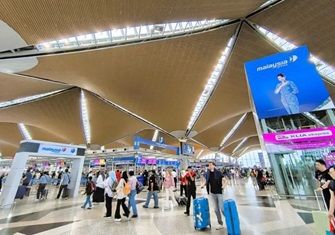
Recent drug-related cases and other security incidents have prompted Malaysia to overhaul security at Kuala Lumpur International Airport (KLIA), with the government approving 17 measures covering screening, access controls and intelligence sharing. The Cabinet approved the recommendations on August 19 following a joint memorandum from the Home Ministry and Transport Ministry.
The move follows raised concerns about the integrity of security controls at Malaysia’s international gateways. These include the detention of a Malaysian citizen in Indonesia over suspected involvement in drug trafficking and a surge in high-profile security cases.
The government has now identified six measures for immediate implementation, starting with targeted, risk-based screening of flights, passengers, crew and baggage considered to present a higher risk.
Authorities will also tighten electronic vetting and access controls for personnel with access to restricted areas at KLIA. The measures cover pilots and cabin crew, airline employees, ground handlers, airport operators, vendors, contractors and other airport workers.
Drug screening of aviation personnel will be strengthened as part of the response. Pilots, cabin crew and other relevant employees will face pre-employment, periodic and random drug testing.
Security visibility will also increase across the airport. More police officers will be deployed at strategic locations, while additional General Operations Force personnel will be assigned to every shift at KLIA Terminal 1 and Terminal 2.
The government is also strengthening the flow of security and intelligence information through the National Immigration Command Centre (NICC), while a new technical governmental committee will coordinate the rollout. It will also address cross-agency issues and monitor the overall action plan.
The 17-point package extends beyond the immediate measures. Medium-term actions will focus on technology, security equipment and human resources, while longer-term reforms will target systems, information sharing and governance.
KLIA will serve as the pilot location before the measures are progressively introduced at other international entry points across Malaysia. Implementation will be based on threat levels, operational needs and the suitability of individual locations.
For international travelers, the government says the approach will emphasize risk-based screening rather than blanket checks. The objective is to direct security resources toward flights, passengers, baggage and personnel considered to pose greater risks.
The government also stressed that the measures will be implemented professionally and within the law, while considering passenger rights, data protection and the interests of the aviation industry. The overhaul will help to strengthen Malaysia’s international gateways and restore confidence among Malaysian travelers, tourists and the wider aviation community.