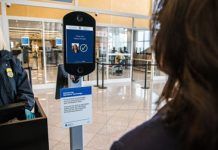


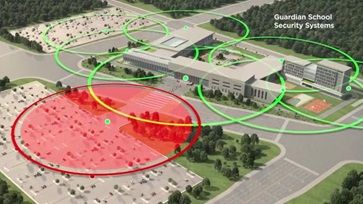
There’s cutting-edge technology on the market that schools can use to detect potential weapons threats on campus. Minnesota lawmakers are considering a bill to provide $4 million to the Department of Public Safety to implement a pilot project using the technology at eight schools across the state.
“My normal life, I’m a middle school principal, so school safety and keeping kids safe is near and dear to my heart,” Rep. Ben Bakeberg, R-Jordan, said before presenting his bill to the House Public Safety Committee.
The technology uses a combination of cameras, radar and artificial intelligence to spot weapons like guns, even if they’re concealed in a backpack or pocket, as soon as someone carries them on campus. There’s real-time monitoring and alerts,” Bakeberg told the committee. “There’s a rapid response coordination option with emergency services.”
But a representative of the ACLU of Minnesota questioned whether the technology results in bias and invades privacy.
“Over-reliance on surveillance has been shown to result in disproportionate discipline of BIPOC students, LGBTQ students and undocumented students and students with undocumented family members,” testified John Boehler of the ACLU. Some DFL lawmakers also questioned too much reliance on technology.
“Representative Bakeberg, you know your students,” said Rep. Sandra Feist, DFL-Minneapolis. “You are a school leader, and so I trust your personal judgment, understanding the community of kids that you work with, more than I trust technology.”
No vote was taken by the committee, but the bill will be considered to be included in a broader public safety bill at the end of session.
Maren Christenson Hofer, the executive director of the Multicultural Autism Action Network, raised concerns the technology could misinterpret some student behavior as a threat.
“We do have some concerns when we talk about the use of AI tools, especially in the disability community,” she said. “So, particularly in the autism community, we think about lack of eye contact, or students might have repetitive motions or stimming, we think about students who might not be able to obey a command, like those are traits often of disabilities but are often misperceived as threats.”
Christenson Hofer’s son spent several years attending Annunciation Catholic School and knows families affected by the deadly shooting. She emphasized the need for more school safety measures.
“We know providing mental health services, we know providing school counselors, we know bullying prevention, we know making it harder to get hands on weapons, we know those are evidence-based practices,” she said. “AI has a much more questionable reputation. Why are we spending money on things that we don’t know whether they work when there’s a long list of things we know for sure will help keep schools safe?”