


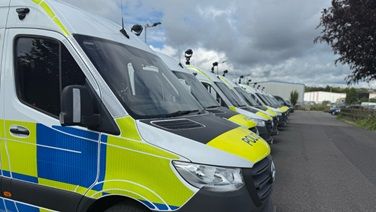
The UK Home Office is announcing the rollout of 10 new Live Facial Recognition (LFR) vans to seven forces across the country, equipping officers with targeted, cutting-edge technology to catch high-harm criminals.
This is in addition to bolstering police presence in communities, as part of the Neighbourhood Policing Guarantee, there is a commitment to put 13,000 more officers into communities by 2029, the public will have consistent direct links to their local force, with dedicated anti-social behaviour leads and new visible patrols in town centres.
The new vans will operate according to strict rules, which ensure they are only deployed when there is specific intelligence. The College of Policing has clear guidance on how the technology should be used.
These vehicles enable law enforcement to target and locate wanted criminals and suspects for the most serious crimes including sex offences, violent assaults, homicide and serious and organised crime. Forces already using LFR have used it to arrest rape, domestic abuse, knife crime and robbery suspects as well as sex offenders breaching their conditions. The technology has also been used to maintain safety at big public events.
Existing safeguards require checks only to be done against police watchlists of wanted criminals, suspects and those subject to bail or court order conditions like sex offenders. Watchlists are bespoke to every deployment, with officers following strict guidance from the College of Policing guidance when composing a list.
Police forces including the Metropolitan Police and South Wales have already seen success with their own live facial recognition deployments. The Met reported that in 12 months they made 580 arrests using LFR for offences including, rape, domestic abuse, knife crime, GBH and robbery, including 52 registered sex offenders arrested for breaching their conditions.
Alongside the roll out of the 10 vans, the government will simultaneously consult on how the technology should be used and what appropriate safeguards and oversight are needed to ensure transparency and public confidence, in turn helping the government to shape a new legal framework for its use.
They also need to follow the College of Policing’s guidance on how the technology is used – measuring faces from a live feed only against police watchlists to try to determine matches – and comply with the surveillance camera code of practice.
Every van is manned by trained officers who check every match made by the technology. The algorithm being used in the vans has been independently tested and will only be operated in specific circumstances and with robust oversight. The facial recognition algorithm used in the new vans has been independently tested for bias by the National Physical Laboratory (NPL). The testing found that the algorithm is accurate and there is no bias for ethnicity, age or gender at the settings used by the police.
The 10 new units will be deployed to forces in Greater Manchester, West Yorkshire, Bedfordshire, Surrey and Sussex (jointly), and Thames Valley and Hampshire (jointly).
The mobile units will be distributed in the coming weeks, with the rollout being coordinated by the National Police Chiefs Council and South Wales Police. It will be for individual forces to determine how and when they are deployed in their respective areas, operating within the College of Policing guidance, but with clear monitoring of their use and effectiveness in order to feed into the consultation.