




Why geopolitical intelligence is now a core responsibility of the Chief Security Officer
Events that begin far away do not remain distant for very long. A missile strike, maritime blockade, political protest or flash flood can quickly disrupt travel, supplies, communications or normal office operations. The 2026 Nepal floods are a useful example. Roads, bridges and communication links were damaged across the affected districts. If an employee was travelling through that area, the organization had an immediate responsibility to find out where the person was, establish contact and arrange whatever support was needed.
The risk is no longer peripheral. The World Economic Forum’s Global Risks Report 2026 ranked geoeconomic confrontation first and state-based armed conflict second among near-term risks. PwC’s 29th Global CEO Survey found that 23 percent of CEOs identified geopolitics as a major threat. Across military and corporate security roles, I have observed that organizations rarely suffer from a complete absence of information. More often, they possess abundant information but lack a disciplined mechanism to verify it, connect it with business exposure and place a decision before the right leader in time. That is the gap a modern CSO must close.
Why Geopolitical Awareness Matters
What if an Organization has no Feed on Global Developments
When an organization does not regularly monitor developments outside its immediate operating area, the first warning often comes from an affected employee or business unit. A flight has been cancelled, a road is closed, a supplier cannot deliver or unrest has reached the vicinity of an office. By then, the security team is already reacting. Travel may have continued when it should have been reviewed, and useful time for preparing alternatives may have been lost.
This is not merely an information gap; it is operational exposure. Once a crisis dominates the headlines, many preventive options may already have disappeared.
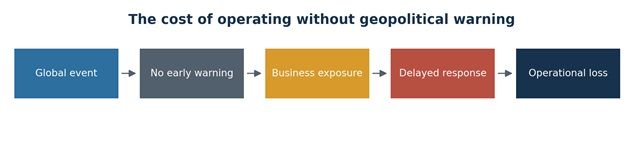
Figure 1: How the absence of early warning converts an external event into organizational loss
What Geopolitics Means for Business
For a CSO, geopolitics includes any political, security, economic or social development capable of changing the organization’s operating environment. A distant conflict may alter fuel prices, shipping routes, technology access, insurance costs or cyber threats. An election may trigger demonstrations and regulatory change; a diplomatic dispute may produce sanctions, visa restrictions or hostility towards a brand.
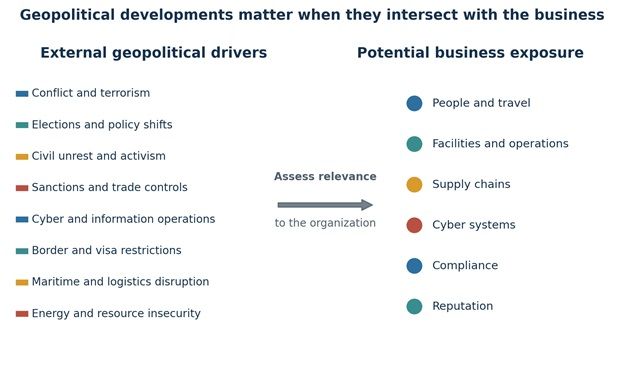
Figure 2: External developments become material only when they intersect with organizational exposure
Importance for the CSO and the Business
The value to the business is practical. Good analysis helps the organization decide whether people should travel, whether a site can continue operating and whether a supplier or route needs an alternative. It also gives management a clearer view of possible cyber activity, regulatory restrictions and reputational concerns. The purpose is not to make Security responsible for every business decision, but to ensure those decisions are taken with a realistic understanding of the risk.
The CSO is not expected to predict every event. The responsibility is to identify credible indicators, assess their relevance and create enough warning time for the organization to act.
Strengthening the Organization’s Duty of Care
Duty of Care requires reasonable measures to protect employees, contractors and business travellers from foreseeable harm. Analysis makes that obligation operational. It connects a warning with known travellers and worksites, triggers targeted communication, records acknowledgement, supports movement restrictions or evacuation and preserves a decision trail. A generic alert informs; an exposure-led alert identifies who is at risk, what they must do and how the organization will assist.
From information to intelligence
 The Board and senior management can read the news for themselves. What they require from the security function is an assessment of what the development means for the organization. Who or what is exposed? How reliable is the information? What is likely to happen next? Is any decision required now? A useful brief answers these questions directly and states when the position will be reviewed again.
Reporting that unrest has begun is information. Identifying exposed employees and facilities, recommending travel restrictions and preparing response options is intelligence-led action.
My practical test is straightforward: an intelligence product should change a decision, confirm that no change is required, or trigger a defined watch point. If it does none of these, it is probably reporting rather than intelligence. The same discipline applies to escalation. Not every international development belongs before the Board, but every material exposure must have a named owner, an action threshold and a review time. This prevents both alarm fatigue and the more dangerous assumption that someone else is monitoring the risk.
Building a Geopolitical Intelligence Capability
Internal team of Trained Analysts
An internal team can collect and assess OSINT, government advisories, trusted media, industry networks and local contacts. Its advantage is context: analysts know the organization’s people, locations, travel, suppliers, assets and risk appetite. Its constraints are cost, specialist coverage and the difficulty of sustaining continuous multilingual monitoring.
Outsource to a Specialist Provider
An external provider is useful when the organization cannot maintain continuous coverage across every country, language and time zone. It can provide alerts, country assessments, travel information and access to specialist analysts. The limitation is that the provider does not know the business as well as the internal team does. Reports may be accurate yet still be too broad, too frequent or unrelated to the decisions management actually faces.
Recommended approach: A hybrid model
For most large or geographically dispersed organizations, neither option is sufficient on its own. The external provider watches the wider environment and brings specialist coverage. The internal team decides whether the warning matters to the organization, identifies the people and operations concerned, and recommends a response. This division of effort works well because the organization benefits from wider coverage without giving up its own judgement or accountability.
The balance should reflect scale. A small organization may use an external service with a designated internal owner; a regional business may maintain a small analytical cell; and a multinational may need a dedicated team supported by specialist providers.
The intelligence Cycle
Collection should begin with defined business questions, not indiscriminate monitoring. Requirements guide collection; analysts verify and assess the information; findings are disseminated to named decision-makers; action and feedback refine the next cycle.
A Disciplined Intelligence Cycle
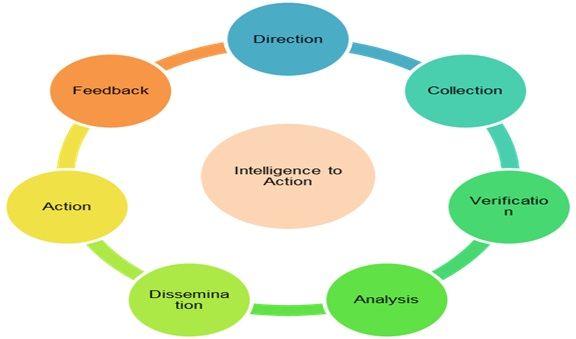
Figure 3: Intelligence is a managed cycle, not a one-way flow of alerts
Intelligence products
Products should match decisions: immediate incident alerts, daily operational briefs, weekly regional assessments, executive travel briefs, scenario reports and Board-level strategic assessments. Frequency alone is not value; each product should identify exposure and the decision or action required.
Verification and misinformation controls
OSINT offers reach and speed but may be outdated, manipulated or deliberately false. Analysts must corroborate important claims, grade source reliability and confidence, verify imagery and distinguish fact from judgement. In a crisis, an unverified alert can be as damaging as a delayed one.
Governance and Ownership
The CSO may lead the intelligence effort, but it cannot be run as a Security-only activity. A warning may require action from Travel, Cybersecurity, Business Continuity, HR, Legal, Compliance, Supply Chain or Corporate Communications. Each function should know its part before a crisis occurs. The organization must be clear about who verifies the information, who approves the response, who communicates with employees and who confirms that the required action has been completed.
Selecting the Best Intelligence Solution
The best provider is not necessarily the largest or most expensive. It is the one that matches the organization’s footprint, exposure and decision requirements. Selection should start with countries, cities, travellers, sites, suppliers, logistics routes, regulatory exposure, local-language needs and existing GSOC, notification and incident-management systems.
Start with the Organization’s Risk Profile
The assessment should begin with the organization, not with a vendor presentation. Where are the employees, offices and critical facilities? Which journeys, suppliers and logistics routes are essential to operations? The review should also consider exposure to sanctions or regulatory change, the need for local-language monitoring, and the level of crisis or evacuation support that may be required. Existing GSOC and notification systems must also be taken into account. Once these needs are clear, the organization can judge whether a provider is genuinely suitable rather than simply well known.
Apply Identical Evaluation Parameters
All shortlisted providers should be tested against the same requirements and the same developing scenario. This makes it easier to see who detects the issue early, verifies it properly and explains its relevance to the business. Global reach is useful, but so are access to local-language sources, sound analysis, timely alerts and the ability to support the organization during a crisis. The real test is whether the provider can separate an important warning from the daily volume of background reporting.
The technology behind the service also deserves scrutiny. It should work reliably, connect with the organization’s existing systems and protect sensitive employee and business information. Management should know who is available when an alert requires discussion, how the provider will continue operating during a major crisis and how easily the service can be expanded or exited. Only after this should price be compared, because a cheaper service that cannot support a decision has little operational value.
Test Claims Through Evidence
Test claims through demonstrations, sample reports, references and a time-bound pilot. Give every provider the same developing scenario and compare detection time, verification, relevance, escalation and recommendations. A polished interface cannot compensate for weak judgement.
Review analyst qualifications, staff turnover, dependence on AI, data location, surge capacity, historical-data portability and exit provisions. Record both advantages and limitations; no provider should be presented to management as having universal coverage or certainty.
Practical Use Cases for Provider Evaluation and Operational Response
Use case 1: From Middle East disruption to an employee’s working day
This is a hypothetical situation. Fighting in the Middle East begins to affect commercial shipping through the Strait of Hormuz and Bab el-Mandeb. At the same time, damage to Saudi Arabia’s East–West pipeline limits one of the alternative routes for moving oil towards the Red Sea. Tankers are delayed, freight and insurance charges increase, and countries dependent on imported energy begin to worry about the availability and cost of fuel.
The organization’s analysts verify maritime advisories, government announcements, energy indicators and transport restrictions, then map the effect on commuting, business travel, generator reserves, logistics vendors and critical facilities. The CSO recommends temporary work from home for suitable functions, restrictions on non-essential travel and priority fuel allocation for emergency vehicles and essential sites.
A mass notification reaches an employee before the morning commute. It explains the decision, provides the operating period and identifies a contact point. A geopolitical development thousands of kilometres away has now changed one employee’s movement and reduced organizational demand on stressed transport and fuel systems.
The lesson is simple: the CSO must trace the line from global event to national effect, business exposure and individual action.
Use case 2: Nepal flash floods and employee accountability
The flood and infrastructure effects described here are factual; the corporate response is illustrative. Severe Bhote Koshi River flooding on 26 August 2026 damaged roads, bridges, power and communication links in Rasuwa and adjoining areas, cutting off communities and requiring some evacuations.
Assume an employee and local driver are travelling near Syafrubesi. The intelligence team monitors official updates, road closures and connectivity failures, then sends a mass notification directing travellers to confirm safety and stop non-essential movement. The employee does not acknowledge it. The control room checks the itinerary, hotel and vehicle details, contacts the manager and driver, and escalates the matter from monitoring to employee accountability.
Intermittent connectivity later allows contact. Both are safe in a lodge, but the road and bridge are damaged. They are instructed to shelter, confirm food, water and medication, and follow scheduled check-ins. Local support and alternate evacuation options are prepared while family and management receive controlled updates.
Movement takes place only after a safe route and transport are confirmed. Travel to the district is suspended and other personnel and vendors are checked. Here, intelligence fulfils Duty of Care by locating the employee, preventing unsafe self-evacuation and sustaining support until safety is restored.
Use case 3: India–Pakistan conflict and Operation Sindoor – May 2025
The conflict events are factual; the corporate response is illustrative. Operation Sindoor began on 7 May 2025 amid India–Pakistan military escalation. Official fact-checking identified edited videos, recycled footage and false claims about attacks on military and civilian infrastructure. The Government later reported blocking more than 1,400 misleading or harmful URLs. CERT-In also warned the industry of increased ransomware, distributed denial-of-service attacks, defacement, breaches and malware.
Inside a large corporation, employees circulate unverified messages about attacks, airport closures, blackouts and fuel shortages. Customers and vendors seek continuity assurances, while phishing messages imitate official advisories and public-facing systems experience increased scanning. The organization must avoid both complacency and overreaction.
The Executive Committee and Board ask: Are employees and facilities safe? Which offices, data centres, vendors and routes are exposed? Has any corporate system been compromised? Is the online information genuine? What decision is required now, and what indicator would trigger relocation, restricted travel or temporary closure?
The CSO creates one operating picture by combining official releases, fact checks, cyber advisories, aviation notices, trusted media and local contacts with travel, facility, vendor and network data. Claims are marked verified, unverified or false, with confidence, source and time stamp.
The executive report states what changed, confirmed and disputed information, exposed people and assets, actions taken, decisions required and the next update time. Cyber teams strengthen monitoring and phishing controls; physical security checks employee accountability and site readiness; travel restrictions and employee messages use one approved corporate channel.
Conclusion
Geopolitical awareness is now a business requirement. Conflict, protest, cyber campaigns, border restrictions and disrupted transport routes can rapidly affect employees, facilities, supply chains and reputation.
The CSO must ensure that credible warning reaches the right decision-maker while options remain. A hybrid capability often provides the best balance of global reach and organizational relevance, but it must match the size, footprint and maturity of the business.
Technology and subscriptions do not create resilience by themselves. Intelligence must connect with governance, crisis management, communication and accountable action.
Did the intelligence reach the right decision-maker in time, and did it lead to appropriate action?
If the answer is no, the output was merely information. Effective geopolitical intelligence creates foresight and enables proportionate action before disruption becomes a crisis.
References:
[1] World Economic Forum. Global Risks Report 2026. Published 14 January 2026. Geoeconomic confrontation ranked first and state-based armed conflict second for 2026.
[2] PwC. 29th Global CEO Survey. Published 19 January 2026. Twenty-three percent of CEOs identified geopolitics as a major threat.
[3] Ministry of Foreign Affairs, Government of Nepal. Daily Situation Update on Bhote Koshi River Floods, 9 September 2026.
[4] The Kathmandu Post. Oft-battered Langtang Valley cut off after Rasuwa floods. Published 2 September 2026 and updated 3 September 2026.
[5] Press Information Bureau, Government of India. Securing the Nation. Published 19 June 2026; records that Operation Sindoor was launched on 7 May 2025.
[6] Ministry of Information and Broadcasting, Government of India. Government Debunks Pakistani Propaganda Against India and Armed Forces via Official Fact-Check Unit. Published 30 July 2025.
[7] Indian Computer Emergency Response Team. Advisory CIAD-2025-0019, Essential Measures for Industry for Safeguarding Business Operations against Cyber Security Threats. Issued 10 May 2025.
Note:
AI tools assisted with research organization, drafting and language refinement. The author has reviewed the factual claims, references, analysis and recommendations, which reflect his professional judgement.
The author is the Regional Head of Security for South Asia at VFS Global and an Asia Pacific Regional Board Member of ASIS International. An Indian Army veteran, a gallantry awardee for counter-terrorist operations, with more than two decades of operational and instructional experience, he has led corporate security, GSOC, facility management, crisis preparedness and business resilience functions across major organizations.