

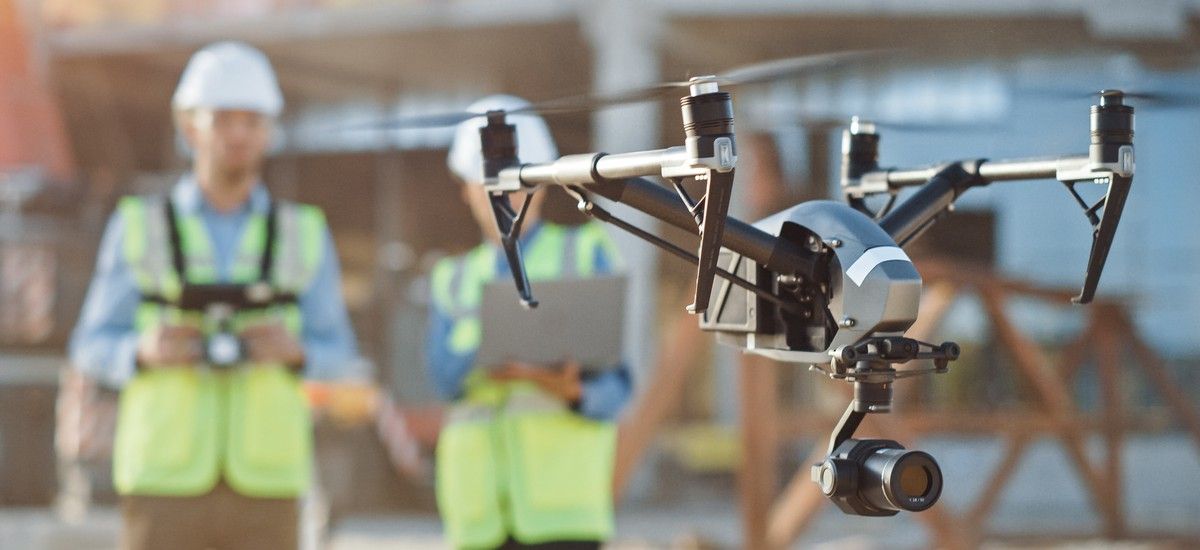
The White House has unveiled a sweeping set of measures designed to secure U.S. airspace as uncrewed aircraft system (UAS) operations grow increasingly complex. As of April, there are more than 1 million drones registered with the FAA.
About 420,000 of these are commercial drones that perform inspections, transport cargo, and deliver food, drinks, prescriptions, and medical equipment for compensation. Of the rest, many are hobbyist drones produced by China’s DJI—a company lawmakers have derogatorily referred to as “Tiktok with wings.” DJI drones are banned by several federal agencies due to accusations of spying for the Chinese government.
As the number of registered drones grows, the White House believes so too does their potential to jeopardize public safety and national security. Though small, many drones are strong enough to punch a hole through an aircraft. They have caused stoppages of National Football League and other professional sporting events and even interrupted a Green Day concert. The White House’s latest executive order aims to increase UAS oversight to monitor and mitigate those threats.
“Criminals, terrorists, and hostile foreign actors have intensified their weaponization of drone technologies, creating new and serious threats to our homeland,” the order reads.
The FAA has implemented provisions such as the remote identification rule—which requires all registered drones to have a “digital license plate”—to monitor UAS. The executive order takes things a bit further by authorizing federal agencies to “use existing authorities to detect, track, and identify drones and drone signals.” It creates a grant program to extend drone detection technology to state, local, tribal, and territorial law enforcement, many of which are already using it. It also calls for stricter enforcement of airspace restriction violations—the FAA in August, for example, levied more than $300,000 in fines against unruly drone pilots.
The order further requires the attorney general and secretary of the Department of Homeland Security to explore adding counter-UAS capabilities for the Joint Terrorism Task Forces that secure public gatherings like the Super Bowl. It mandates the creation of a National Training Center for Counter-UAS to refine those capabilities for major events like the 2026 World Cup and 2028 Summer Olympic Games in Los Angeles, which may feature low-flying air taxis. A Federal Task Force to Restore American Airspace Sovereignty, meanwhile, will “review and propose solutions to UAS threats.”
The order would also help critical infrastructure and other public facilities protect against rogue drones. It directs the FAA to create a process for restricting UAS operations over those sites and publish guidance for their owners to deploy counter-drone systems. A risk-based assessment would gauge whether borders, large airports, and military installations should be designated protected areas.