

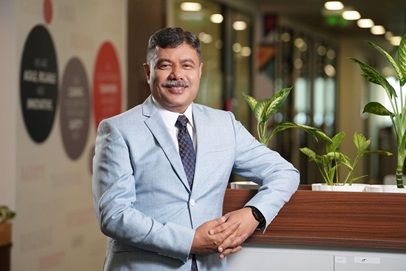
Inputs by Rajeev Sharma, Cluster Managing Director-India, Nepal, and Bangladesh, G4S
Security has undergone a profound transformation over the past decade. What was once defined by physical barriers, isolated surveillance systems, and manual monitoring has evolved into a dynamic, data-driven ecosystem. In today’s interconnected world, risks are no longer confined to a single domain, they span physical spaces, digital networks, supply chains, and human behaviour. As a result, modern security demands a more intelligent, responsive, and integrated approach.
At the heart of this evolution lies the convergence of Artificial Intelligence (AI), the Internet of Things (IoT), and human intelligence. Together, these elements are reshaping how organisations anticipate threats, interpret complex environments, and respond in real time. Rather than operating as separate layers, they function as a unified system, where sensors capture information, algorithms analyse it, and people make informed decisions.
From Isolated Systems to Intelligent Ecosystems
Traditional security models were largely reactive. Cameras recorded incidents for later review, access control systems operated independently, and incident response often relied on manual intervention. While these measures provided a basic level of protection, they lacked context, speed, and predictive capability. Modern security ecosystems, by contrast, are built on continuous data flow and real-time intelligence. IoT devices act as a distributed sensory network, AI provides analytical depth, and human expertise ensures contextual understanding and ethical decision-making. This convergence enables organisations to move from responding to incidents after they occur to identifying and mitigating risks before they escalate.
IoT: The Sensory Layer of Security
IoT technologies form the foundation of this new security architecture. Smart cameras, motion detectors, biometric access systems, environmental sensors, connected vehicles, and wearable safety devices continuously collect data across facilities and operations. These devices provide visibility into movement patterns, environmental conditions, access activity, and operational anomalies.
What makes IoT transformative is not just the volume of data it generates, but its interconnectedness. Systems that once functioned independently such as CCTV, access control, and fire safety, can now communicate with each other. For example, an unauthorised access attempt can automatically trigger video verification, send alerts to a command centre, and log the event for audit purposes.
This real-time situational awareness allows organisations to detect unusual activity at the earliest stage, reducing the likelihood of incidents escalating into full-scale threats.
AI: Turning Data into Insight
While IoT provides the raw inputs, AI is what makes sense of the data. The sheer volume of information generated by connected devices would be impossible for humans to process manually. AI addresses this challenge by identifying patterns, detecting anomalies, and prioritising risks.
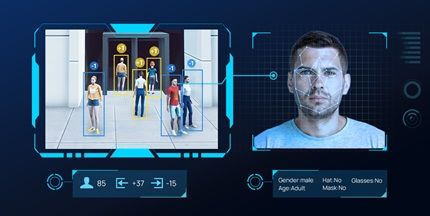
AI-powered video analytics can distinguish between normal and suspicious behaviour, such as loitering in restricted zones, unattended objects in public spaces, or unusual crowd movement. Behavioural analytics can flag deviations from routine access patterns, helping identify potential insider threats. Predictive models analyse historical and real-time data to forecast vulnerabilities, such as peak risk periods or frequently targeted locations.
Importantly, AI reduces false alarms by filtering out non-critical events. This ensures that security teams are not overwhelmed by unnecessary alerts and can focus on genuine risks that require immediate attention.
 Human Intelligence: The Decision-Making Core
Despite the sophistication of AI and IoT, human intelligence remains central to effective security. Technology can detect anomalies, but it cannot fully understand context, intent, or ethical implications. Human professionals interpret AI-generated insights, validate threats, and determine the most appropriate course of action. Security personnel also play a critical role in designing strategies, conducting risk assessments, managing crises, and ensuring compliance with legal and ethical standards. Their ability to adapt to complex, unpredictable situations is something technology alone cannot replicate. In this integrated model, AI augments human capability rather than replacing it. The result is faster decision-making, more accurate threat assessment, and more nuanced responses.
Real-Time Monitoring and Predictive Response
One of the most significant advantages of this convergence is the ability to operate in real time. Instead of passively recording events, modern systems actively monitor and interpret them as they happen. When an IoT device detects an anomaly such as an unauthorised entry, unusual movement, or environmental hazard, AI immediately analyses the data, assigns a risk level, and triggers an alert. This automated triage ensures that critical incidents are prioritised and addressed without delay.
Predictive analytics takes this a step further by identifying patterns that indicate potential risks. For example, repeated access attempts outside working hours, unusual activity in sensitive areas, or deviations from normal operational behaviour can signal emerging threats. By recognising these indicators early, organisations can implement preventive measures rather than reacting after an incident occurs.
Centralised command centres further enhance this capability by consolidating data from multiple locations into unified dashboards. This enables coordinated responses across geographically dispersed sites and improves overall situational awareness.
From Data Overload to Actionable Intelligence
A common challenge in modern security environments is data overload. Cameras, sensors, and digital systems generate enormous volumes of information, which can become overwhelming without proper integration. Unified security platforms address this challenge by correlating data from multiple sources like surveillance, access control, alarms, visitor management, and cybersecurity systems into a single interface. AI-driven risk scoring helps prioritise alerts, while automated reporting simplifies compliance and audits. By providing context and reducing fragmentation, these platforms transform raw data into actionable intelligence. Security teams can quickly identify the nature of a threat, its location, and its potential impact, enabling faster and more informed decision-making.
Operational Efficiency and Risk Reduction
The convergence of AI, IoT, and human intelligence delivers tangible operational benefits beyond threat detection.
- Reduced false alarms: AI filters out non-threatening events, minimising alarm fatigue and improving response quality.
- Optimised resource allocation: Predictive insights enable targeted deployment of personnel and assets in high-risk areas.
- Cost efficiency: Automation reduces manual monitoring requirements while expanding coverage.
- Adaptive security posture: Systems continuously learn and evolve in response to new data and emerging threats.
- Enhanced compliance: Automated logs and analytics simplify regulatory reporting and audits.
These improvements not only strengthen security but also support business continuity and operational resilience.
Applications Across Critical Sectors
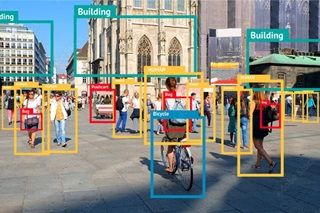
The impact of integrated security ecosystems is particularly evident in sectors where safety and continuity are essential. Critical infrastructure relies on real-time monitoring to prevent disruptions and respond to emergencies. Financial institutions use behavioural analytics to detect fraud and insider threats. Healthcare facilities protect patients, staff, and sensitive data through integrated access control and surveillance. Logistics networks track assets and identify anomalies to prevent theft and tampering. Smart cities use sensor networks and AI to manage crowd safety, traffic flow, and emergency response. In each of these environments, the combination of technology and human expertise creates a more resilient and adaptive security framework.
 The Importance of Governance and Ethics
As security systems become more data-driven, issues of privacy, ethics, and governance become increasingly important. The use of facial recognition, behavioural analytics, and large-scale data collection must be balanced with clear policies, transparency, and regulatory compliance.
Human oversight is essential to ensure that AI is used responsibly and that decisions are fair, accountable, and aligned with organisational values. Regular audits, clear data governance frameworks, and human-in-the-loop processes help maintain trust and ensure ethical implementation.
Building a Future-Ready Security Strategy
To fully benefit from this convergence, organisations need to adopt a strategic approach. This includes integrating systems rather than operating them in silos, investing in training for security personnel, implementing scalable architectures, and conducting regular risk assessments.
Equally important is the shift from a reactive mindset to a predictive one. Security should not be viewed merely as a protective function but as a strategic enabler that supports operational continuity, risk management, and organisational resilience.
Conclusion: Intelligence as an Integrated Capability
The convergence of AI, IoT, and human intelligence represents a fundamental shift in how security is conceptualised and implemented. It moves the focus from isolated tools and manual processes to intelligent ecosystems that learn, adapt, and respond in real time. Technology provides speed, scale, and analytical depth. Human expertise provides context, judgment, and ethical oversight. Together, they create a security framework that is not only more effective but also more resilient and adaptable.
In an increasingly complex risk landscape, the future of security will belong to organisations that embrace this integration, where machines enhance awareness, data drives insight, and human intelligence remains at the centre of every critical decision