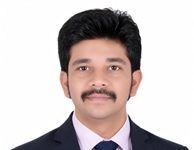


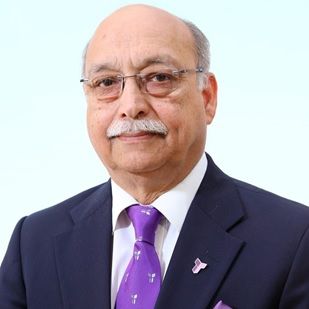
SECURITY TODAY brings you this exclusive interaction with Brig. Rajan Oberoi, Global Vice Chairman, on the occasion of his superannuation from the Tenon Group, a Gurugram-headquartered global enterprise specializing in integrated security, facility management, and remote surveillance solutions. Founded in 1995 by Indian Army veteran Maj. Manjit Rajain, the group operates across India, the UK, Singapore, and Germany, serving over 3,100 corporate clients, including several Fortune 500 companies, through a workforce of more than 100,000 professionals worldwide.
You were among the pioneering leaders who helped raise the first combat elements of the National Security Guards (NSG) and later commanded this elite force. How did those experiences shape your leadership philosophy while scaling Tenon Group into a multinational organization operating across India, the UK, Singapore, and Germany?
My years with the NSG deeply shaped my leadership philosophy. Being part of the pioneering team that raised the first combat elements of the NSG and later commanding the force taught me the importance of discipline, preparedness, precision, and people-centric leadership. In high-pressure environments, success depends on trust, teamwork, and decisive action.
When I helped scale Tenon Group, I carried these principles forward. Scaling a multinational organization across India, the UK, Singapore, and Germany required operational excellence, adaptability, and resilience, values very similar to those needed in elite security operations.
The NSG also reinforced my belief that leadership is about empowering people and earning trust through consistent performance. These principles continue to guide Tenon Group’s growth and culture across global markets.
During your tenure, Tenon Group evolved from a traditional guarding business into a diversified global security and facility management organization with a presence across multiple international markets. What were the defining strategic decisions that enabled this transformation, and how do you view the evolution of the security industry over the last two decades?
One of the key decisions at Tenon Group was to move beyond traditional guarding services and build integrated solutions across security, facility management, electronic surveillance, and remote monitoring. We recognized early that clients wanted technology-led, end-to-end risk management solutions rather than standalone services.
Another important step was expanding globally and adopting international best practices across markets like India, the UK, Singapore, and Germany. This helped us build a scalable and process-driven organization.
Over the last two decades, the security industry has evolved significantly, from being manpower-driven to technology and intelligence-led. Today, clients expect integrated, proactive solutions combining physical security, surveillance, analytics, and facility management with a strong focus on efficiency and business continuity.
Tenon today stands as a major international enterprise with operations spanning multiple geographies and sectors. What values from your military career proved most critical in scaling such a large organization while maintaining operational discipline, client trust, and leadership continuity?
The most important values I carried from my military career into building Tenon Group were discipline, integrity, accountability, and teamwork. In the armed forces, consistency, preparedness, and attention to detail are critical, and those principles became the foundation for scaling Tenon into a multinational organization.
As we expanded across India, the UK, Singapore, and Germany, maintaining operational discipline and client trust required strong systems, continuous training, and standardized processes across markets. We also focused heavily on empowering leadership teams and building a culture of ownership and professionalism at every level.
Another key lesson from the military was that trust is earned through consistent performance. Whether in security, facility management, or surveillance solutions, clients value reliability and responsiveness above everything else. These values have helped Tenon Group build long-term relationships and sustain leadership continuity while growing across sectors and geographies.
You have often said that security has evolved “from reactive to predictive, from siloed to integrated, and from cost-center to value creator.” What major shifts in technology, client expectations, and risk perception drove this transformation, and how successfully has the industry adapted to this new reality?
The transformation has largely been driven by the growing need for integrated and specialized services across industries. Earlier, security was primarily limited to physical guarding and incident response. Today, organizations require a combination of manned guarding, electronic surveillance, remote monitoring, facility management, risk consulting, emergency response, and technology-enabled solutions working together seamlessly.
Client expectations have also evolved significantly. Businesses now look for partners who can deliver end-to-end solutions that enhance operational efficiency, employee safety, compliance, and business continuity. This has led to greater adoption of AI-enabled surveillance, command centers, analytics, automation, and integrated facility management services.
At Tenon Group, we recognized this shift early and expanded beyond traditional security into facility management, electronic security systems, and remote surveillance solutions. The industry has adapted considerably over the years, but the focus today is clearly on integrated, proactive, and technology-driven services rather than standalone offerings.
Very few leaders get the opportunity to work across two generations of promoters within the same organization. How has the transition from the founder-led era to the new-generation leadership shaped Tenon Group’s culture, ambition, and global outlook?
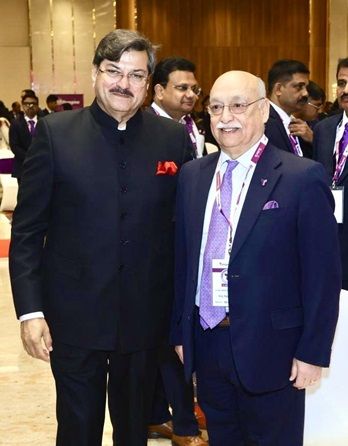 The transition across two generations of leadership has played a significant role in shaping Tenon Group’s growth journey. Major Manjit Rajain, a well known and respected figure in the industry, established the organization with strong foundations of discipline, integrity, operational excellence, and long-term client relationships. These values helped build credibility and a culture of professionalism that continues to guide the company today.
The new-generation leadership has built on this foundation by driving innovation, technology adoption, global expansion, and integrated service offerings across security, facility management, and remote surveillance. This shift has strengthened the company’s ability to respond to evolving client needs and changing global business environments.
What stands out is the seamless blend of legacy and forward-thinking leadership — retaining the core principles that built the organization while creating a more agile, technology-driven, and globally aligned enterprise for the future.
As you step into retirement after decades of distinguished service in both national security and corporate leadership, what do you consider your most meaningful achievement? And what advice would you give to the next generation of security leaders who will shape the future of integrated risk management and enterprise security?
As I step into retirement after decades in both national security and corporate leadership, I look back with immense gratitude and satisfaction. I have had the privilege of serving the country in two meaningful capacities, first through the Indian Army, then the National Security Guard, and later by helping build Tenon Group into a globally respected integrated security and facility management organization.
For me, the most meaningful achievement has not just been building scale or expanding internationally, but creating an institution grounded in discipline, integrity, professionalism, and trust. Seeing the organization grow across geographies, create opportunities for thousands of people, and build long-standing client relationships has been deeply fulfilling.
Retirement, for me, is not simply an end of a professional chapter, but a moment to reflect on the journey, the people, and the values that shaped it. I take pride in knowing that the organization is well-positioned for the future, with strong leadership, a clear vision, and a culture built to endure.
My advice to the next generation of security leaders is to embrace the fact that the future of security will be increasingly integrated, technology-driven, and intelligence-led. However, while technology will continue to transform the industry, leadership, ethics, training, and human judgment will remain equally important. The leaders who will shape the future successfully are those who can combine innovation with operational excellence and remain adaptable in an evolving risk environment.
Above all, never forget that security is ultimately about protecting people, enabling businesses, and building trust. Organizations that remain proactive, resilient, and people-centric will continue to lead the future of integrated risk management and enterprise security