


For generations, the architecture of national security rested on a simple premise. The military defended the nation against external threats, the police maintained internal law and order, and private security protected businesses and private assets. Each had clearly defined responsibilities and distinct operational boundaries. Those boundaries are beginning to blur.
Across the world, governments, courts and defence establishments are quietly rethinking how security responsibilities should be distributed. The reason is not institutional failure but the changing nature of threats, shrinking public resources, technological advances and growing expectations from citizens and businesses.
Security is no longer the responsibility of a single institution. It has become an interconnected ecosystem where capability, rather than tradition, is increasingly determining who does what. Two recent developments illustrate this shift remarkably well.
In Telangana, the High Court, hearing contempt proceedings arising from the alleged violation of its earlier orders in a property dispute, briefly directed that Army personnel be deployed to protect the disputed land before subsequently keeping the order in abeyance after receiving assurances from the State Government. Whether or not the Army was ultimately deployed is almost secondary.
What made the episode significant was the court’s willingness to contemplate such an extraordinary measure, reflecting its concern over the effectiveness of civil enforcement in that particular case.
At almost the same time, South Korea’s Ministry of National Defense announced that it was examining whether licensed private security companies could undertake the protection of rear-area military installations. Facing declining birth rates and shrinking military manpower, the objective was to free soldiers from routine guarding duties so they could concentrate on combat readiness.
At first glance, these developments appear to point in opposite directions. One suggests a court looking towards the military when confidence in civilian enforcement is questioned. The other shows the military looking towards private security to perform functions that do not require combat capability.
In reality, both stories are about the same thing. They reflect a changing architecture of trust.
Security today extends far beyond policing or military operations. Critical infrastructure, airports, ports, hospitals, financial institutions, data centres and industrial facilities all require continuous protection against increasingly sophisticated threats that span both the physical and cyber domains. No single institution possesses all the expertise, resources or capacity required to manage these risks. As a result, governments are beginning to allocate responsibilities according to competence rather than institutional convention.
India is itself witnessing an important, though less publicised, transformation.
For nearly two decades, the relationship between the Ministry of Home Affairs and the private security industry was largely regulatory, focused on implementing the Private Security Agencies (Regulation) Act (PSARA).
Today, the engagement has become far more strategic. The Ministry has increased consultations with the industry, encouraged digitisation of PSARA implementation, pressed states to expedite licensing, and sought greater regulatory consistency across the country. More importantly, it has begun evaluating the industry’s capabilities as an important component of India’s overall security ecosystem.
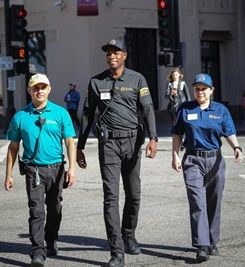 The growing role of the Central Industrial Security Force (CISF) in training trainers from private security agencies is perhaps the clearest indication of this changing mindset. Governments do not invest in raising professional standards unless they recognise the strategic importance of the sector. The objective is no longer merely to regulate private security but to build confidence in its professionalism, competence and reliability.
Interestingly, the capabilities of the private security industry are already being recognised both internationally and within India. Indian companies such as SIS and Peregrine protect government and critical infrastructure assets in countries including Australia, New Zealand and Singapore, assignments that demand rigorous standards of governance, training and operational excellence. At the same time, global security leaders such as G4S and Securitas have operated in India for many years, bringing international best practices and demonstrating that professionally managed private security companies are fully capable of protecting critical infrastructure to global standards.
Their success demonstrates that Indian security professionals are capable of operating in highly sensitive environments when supported by robust systems and professional management.
Taken together, these developments point towards a larger global trend. Courts are reassessing confidence in public institutions when exceptional situations arise. Militaries are asking whether highly trained soldiers should continue performing routine guarding duties.
Governments are recognising that private security, when properly regulated and professionally trained, is not merely a commercial service but an important contributor to national resilience.
This does not mean the traditional roles of the military, police and private security are disappearing. On the contrary, each institution continues to perform functions that cannot easily be replicated by another.
The military provides strategic capability and national defence. The police exercise statutory authority and investigative powers. Private security offers scale, specialised expertise and the ability to protect thousands of facilities that public agencies alone could never secure.
The future, therefore, is unlikely to belong to one institution replacing another. It will belong to a collaborative security ecosystem in which responsibilities are allocated according to capability, supported by appropriate legal frameworks, professional standards framework and mutual confidence. Perhaps that is the real lesson from these seemingly unrelated stories.
The Telangana High Court’s extraordinary observations, South Korea’s evolving defence policy, the Ministry of Home Affairs’ increasing engagement with India’s private security industry, and the growing international footprint of Indian security companies are all pointing towards the same conclusion. The question is no longer simply who is responsible for security. It is who is best equipped to deliver it.
As nations confront shrinking resources, increasingly complex threats and rising public expectations, the debate is no longer about choosing between the military, the police or private security. It is about creating the right balance between them.
How should nations allocate trust, authority and capability across the military, police and private security in an era of shrinking resources, rising threats and growing expectations?
———————-
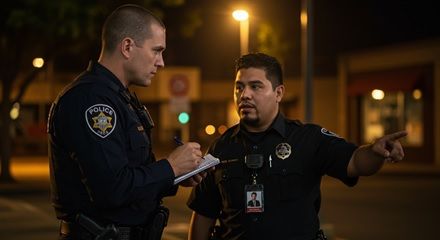
Time For A More Proactive Collaboration Between Private Security And Law Enforcement?
Globally, private security personnel are trained to patrol with purpose, manage access points, watch camera feeds like hawks, and handle disturbances without blowing things out of proportion. They’re also expected to document everything, because in this field, details matter.
They don’t enforce laws like police do, but they know how to de-escalate situations, spot risks early, and act fast when things feel off. And yes, depending on the assignment and the licensing, they may be armed. But training and judgment always come first.
 Police officers have broader authority. They carry the legal weight to make arrests, conduct investigations, issue citations, and respond to a wide range of crimes. Their training is longer, more intense, and deeply rooted in criminal law and public safety protocols. They’re backed by government agencies and held to strict oversight – internal affairs, public complaints, department policies, and the law itself.
Their mission is citywide, countywide, sometimes statewide. And while they do handle all types of crimes, their plate is often full with violent incidents, drug cases, traffic accidents, and so much more. They’re not always nearby when an alarm goes off in a warehouse at 2 a.m.
Both wear uniforms, carry radios, and walk with purpose. But under the surface, the difference is distinct. Police are sworn officers. They have the legal right to detain, search, arrest, and their jurisdiction includes all public spaces. Private security, by contrast, typically works on private property. Their powers are similar to any citizen unless enhanced by specific state laws or contracts, as has been done in some countries.
Officers go through a police academy, often lasting several months. They’re trained in firearms, use of force, pursuit tactics, and legal procedures. Security guards? Requirements vary. Some countries demand rigorous training, others, not so much.
Law enforcement answers to the public. Security answers to the client. That doesn’t mean security guards aren’t held accountable, they are, but it’s through internal policies, licensing boards, and contractual obligations rather than civic oversight.
Police have wide latitude in use of force. Security guards must follow strict boundaries, especially when armed. Every move they make is scrutinized and should be rooted in defense, not offense.
Here’s where things get interesting. While their roles differ, their goals don’t. That’s where collaboration happens.
Security guards are often the first to notice something suspicious, a backpack left unattended, a person loitering in the shadows, a break-in attempt caught on camera. Rather than going in alone, they relay that intel to local law enforcement, who then step in with full authority. The handoff matters. Done right, it saves time, protects lives, and preserves evidence.
There are also situations where they work side-by-side. Large public events, for instance, music festivals, parades, political rallies. Security teams manage access and crowd flow, while police handle perimeter control and rapid response.
And let’s not forget emergencies. In disasters, natural or manmade, law enforcement and private security often form a temporary alliance. They coordinate traffic, help evacuate buildings, and guard critical infrastructure.
A solid relationship between security firms and police departments is essential in some environments. Here’s why:
- Coverage Expands: More boots on the ground means faster response, greater visibility and wider security coverage.
- Prevention Improves: A visible, coordinated presence often deters crime and security incidents before they occur.
- Less Strain on Police: With private guards handling routine surveillance, access control and perimeter protection, police can focus on law enforcement, investigation and major threats.
- Cost-Effective Resource Allocation: Private security can perform many routine guarding functions at a significantly lower cost than deploying police personnel or specialised forces such as the CISF, allowing scarce public security resources to be reserved for duties that require statutory powers or specialised expertise.
- Specialised Industry Knowledge: Private security personnel often develop deep familiarity with the facilities they protect, whether airports, hospitals, factories, data centres or corporate campuses, enabling them to identify unusual activity more quickly and respond effectively.
- Public Confidence Grows: People feel safer when public and private security agencies work together as complementary partners rather than in isolation.
A Stronger Security Ecosystem: Regular cooperation and information-sharing between law enforcement and private security create an integrated security network that enhances situational awareness and improves preparedness during emergencies.